
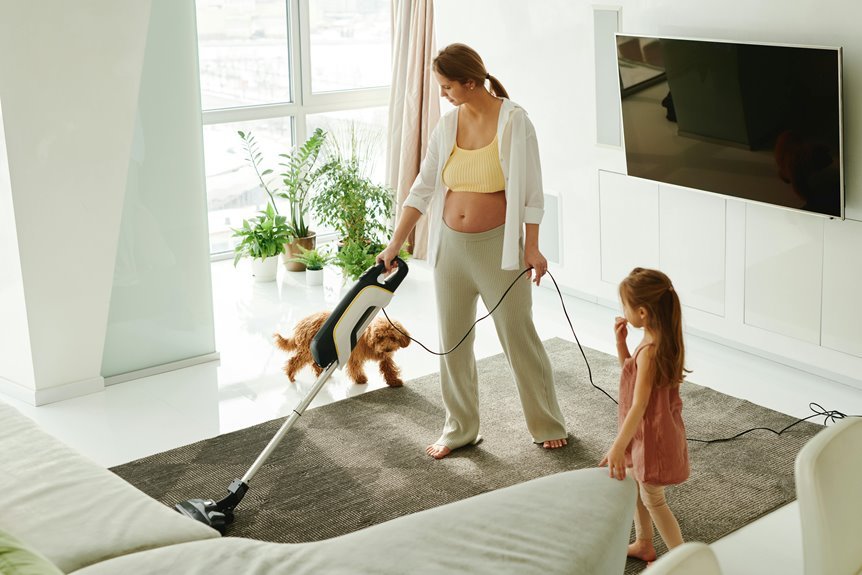

As you vacuum a large home, you need a plan that saves steps and still leaves every room truly clean. Start by adjusting your vacuum for each surface, then work from the farthest corner toward the door using long, overlapping passes. Give busy walkways, corners, stairs, and pet areas extra attention with the right attachments. Keep filters, brushes, and bins clean, because a poorly maintained vacuum can make a large job even harder.
Start With the Right Vacuum Setup
Before you start vacuuming a large home, make sure your vacuum is set up for the type of flooring you have. The wrong setup can waste time and leave dirt behind. Adjust the height for carpet or bare floors, and use the correct attachment so debris doesn’t scatter and fibers don’t snag.
Next, think about vacuum size and power. In a large home, a wider upright or dual motor model helps you clean more with each pass and reduces fatigue.
Filtration also matters. HEPA filtration can trap more dust, which helps shared spaces feel fresher and more welcoming. If you use a bagged vacuum, don’t let the bag get too full, or suction will drop quickly. Clean filters regularly, and your vacuum will keep performing reliably.
Map a Fast Vacuuming Route
A smart route can greatly reduce vacuuming time and make a large home feel more manageable. With a clear plan, you stay organized and prevent the task from feeling endless. Start in the farthest corner of the room and work back toward the door or outlet, so you don’t block your own path.
Next, sequence the rooms in a logical order so you can move through the house in one steady flow. Clean one side first, then continue to the next, instead of moving back and forth.
In larger rooms, divide the floor into smaller sections. Vacuum edges and corners first, then clean the open floor in long, straight, overlapping rows. This approach helps reduce missed areas and unnecessary backtracking. When you follow the same route each time, the routine becomes easier, faster, and more efficient.
Vacuum High-Traffic Areas More Often
Busy areas in your home need more attention than rooms you rarely use. Entryways, hallways, and family room walkways collect the most grit, so they shouldn’t be cleaned like low-use spaces. When you follow your home’s traffic patterns, you focus on the areas your household uses most, and that helps every room feel more welcoming.
- Vacuum busy paths first, before dirt settles deeper into the carpet fibers.
- Use slow strokes with repeated passes, especially where shoes, pets, and snacks move through every day.
- Give high-traffic zones 5 to 7 passes, while quieter areas usually need only 3 to 4.
This habit helps you stay ahead of mess without feeling overwhelmed. You’re caring for the spaces that bring everyone together, and that makes your home feel shared, lived in, and well cared for.
Adjust for Each Floor Type
As you move from room to room, you’ll get better results by matching your vacuum settings to each floor type.
Use a bare floor setting on hardwood, adjust the height for different carpet piles, and choose gentler care for tile and rugs.
This helps protect your floors, improve dirt pickup, and make cleaning easier.
Hardwood Vacuum Settings
When you vacuum hardwood floors in a large home, the right setting matters more than extra effort. You’ll get better results and protect the finish by using gentle hardwood suction settings instead of maximum power. This simple change helps your vacuum lift dust without dragging grit across the surface.
- Switch to bare-floor mode so debris doesn’t scatter.
- Use a hardwood floor brush to guide fine dust and crumbs into the nozzle.
- Turn off the beater bar, if your vacuum allows it, because spinning bristles can leave marks.
As you move from room to room, keep the setting consistent so your entire home feels equally cared for.
You aren’t just cleaning floors. You’re creating a calm, welcoming space where everyone can settle in and feel at home each day.
Carpet Height Adjustments
Each carpet type needs its own height setting, and that small adjustment can make a noticeable difference in how clean your floors feel. Matching the vacuum to your carpet’s pile height helps keep your home fresh, well cared for, and ready for daily use.
Use a low setting for short carpet, a medium setting for standard rooms, and the highest setting for plush carpet. If the vacuum feels hard to push, raise it one level. If it moves too easily, lower it slightly so the brush roll can reach deeper debris. The right balance protects carpet fibers and improves pickup.
In a larger home, check each room before you start. A quick adjustment helps maintain strong suction, supports better vacuum performance, and gives every space the care it needs each day.
Tile And Rug Care
For tile and rugs, the best results come from changing your vacuum setting before you move into the next space. On tile, use the bare floor mode or a hard floor attachment so crumbs don’t scatter. Move slowly along edges first, then clean the center. When dust settles in lines, focus on grout cleaning with steady, overlapping passes.
- Lower suction on delicate rugs to protect fibers and keep them looking lived in, not worn out.
- Check for area rug padding, because secure backing helps your rug stay flat and makes vacuuming smoother and safer.
- Raise the height for thicker rugs, and use shorter strokes so the brush roll doesn’t tug.
As you move between rooms, these small adjustments help every floor feel cared for, and your whole home feels more welcoming.
Use Attachments to Save Time
Start by choosing the right attachment before you tackle a large room, because that small step can save time and reduce effort. When you match the tool to the task, cleaning becomes faster and more efficient, and you feel more in control of your space.
Use a crevice tool for baseboards, corners, and tight gaps. Switch to an upholstery nozzle for sofas, chairs, and cushions where hair often collects. For curtains and blinds, a soft dusting brush removes debris without pulling fabric or scratching slats.
As you move through each room, clean along furniture edges and around table legs before vacuuming the main floor area. This helps you catch hidden dust early and keeps you from going back over the same spots later. It’s a simple habit, but it can make your home feel cleaner, more comfortable, and well cared for.
Vacuum Stairs the Easy Way
When you vacuum stairs, the right attachments make the job faster and less frustrating.
You’ll get better results with a crevice tool for corners and edges, and you’ll stay safer by starting at the top and working your way down.
With a steady method and the right setup, you can clean each step thoroughly without wearing yourself out.
Choose The Right Attachments
Why make stairs harder than they need to be? When you choose the right attachments, each step becomes more manageable. The right tools help you clean edges, corners, and fabric without dragging a full head across every tread. That means faster results and a cleaner home you can feel proud of.
- Use a crevice tool for cleaning along stair edges, risers, and tight corners.
- Pick an upholstery tool for carpeted steps, runners, and nearby landings where dust and hair collect.
- Keep a dusting brush handy for curtains, banisters, and trim so the whole stair area feels finished.
As you move through a large home, these attachments help you stay consistent. You aren’t guessing. You’re cleaning with confidence and care.
Safe Stair Vacuum Technique
Vacuuming stairs can feel awkward, but the job becomes much easier when you use a safe, steady method from the top step down. Keep the vacuum on a flat landing whenever possible. Then use the hose and crevice tool on each step. Focus on proper hand placement, and keep one hand free to guide yourself. This approach helps you feel confident and comfortable as part of a regular home care routine.
| Step | Action | Safety Focus |
|---|---|---|
| 1 | Start at the top | Clear view |
| 2 | Plant your feet | Stable footing |
| 3 | Hold the rail | Better balance |
| 4 | Clean the step edge | Use short strokes |
| 5 | Move down slowly | Do not rush |
As you continue, face the stairs rather than turning sideways. Pause often, keep cords behind you, and stay steady.
Clean Corners and Under Furniture
Don’t let corners and the space under furniture go unnoticed, because those areas quietly collect dust, hair, and grit long after the main floor looks clean. In a large home, these hidden spots can make rooms feel less fresh, even when everything else looks great.
- Start with a crevice tool along corners and baseboard gaps, so you remove debris your main vacuum head misses.
- Check furniture clearance before vacuuming underneath. When the space is tight, use a low-profile attachment and move slowly.
- Reach just beyond the visible edges under sofas, beds, and tables, because dust gathers where your family walks nearby but rarely looks.
When you give these tucked-away spots extra attention, your whole home feels more cared for, and you maintain the clean, welcoming standard everyone appreciates.
Remove Pet Hair Faster
Pet hair can spread quickly in a large home, so you’ll save time by using a pet hair attachment that lifts fur instead of pushing it around.
Start with upholstery, because sofas, chairs, and cushions often hold the most hair and can shed it back onto your floors.
Then clean high traffic areas where your pets rest, play, and move through, so you can remove the heaviest buildup before it spreads again.
Use Pet Hair Attachments
When pet hair clings to every surface, the right attachment helps you remove it faster with less effort. In a large home, that matters. You need tools that help you stay ahead of the mess and feel good about the space you share. A motorized pet tool lifts stubborn hair, while a rubber nozzle creates friction for better fur removal on fabric surfaces. Brush rolls designed for hair also reduce wrapping.
- Choose a rubber or silicone tool for a stronger grip on loose hair.
- Use a mini motorized head where thicker buildup collects quickly.
- Clean the attachment often so suction stays strong and consistent.
With the right setup, managing pet hair feels easier. You stay more in control each day.
Target Upholstery First
Before you start on the floors, vacuum your upholstery first so loose pet hair doesn’t fall right back onto the areas you just cleaned. That simple switch saves time and helps your whole home feel calmer, cleaner, and more welcoming for everyone who lives there.
Start with sofas, chairs, cushions, and your pet’s favorite spots. Use your upholstery tool to lift fur from seams, corners, and under cushions, where hair tends to collect. For faster upholstery cleaning, work in short, steady strokes instead of quick swipes. If fabric holds onto stubborn hair, go over it twice from different directions. This improves pickup without being rough.
At the same time, proper fabric care matters, so match your attachment and suction to the material. You’ll protect your furniture and keep shared spaces feeling fresh, cozy, and truly lived in.
Vacuum High-Traffic Zones
Since people and pets pass through the same few spots all day, those high traffic zones collect hair fast and need your attention first once the upholstery is done. In a large home, these shared paths deserve a smart plan, so your rooms feel fresh for everyone.
- Spot traffic lane patterns near doorways, sofas, stairs, and pet beds first.
- Vacuum slowly in overlapping rows, then change direction to lift stubborn hair.
- Use smart repeat pass timing, giving busy areas 5 to 7 passes before moving on.
This approach helps you stay on top of shedding without feeling behind. You aren’t just cleaning floors. You’re caring for the spaces where your family gathers, relaxes, and belongs.
As soon as you focus here first, the whole home looks cleaner faster and feels more welcoming, too.
Keep Your Vacuum Running Strong
Even in a large home, your vacuum works best when you give it quick care as you clean. Empty the dust bin often, and don’t let a bag get too full. That simple habit helps preserve suction, so every pass still feels strong and steady.
Next, stay on top of filter maintenance. Rinse or replace filters as directed, because clogged filters make your vacuum work harder.
As you move from room to room, pick up toys, cords, and stray socks first. That protects the brush roll and keeps airflow moving. If hair wraps around the roller, stop and clear it before it slows the machine down.
You want your vacuum working with you, not against you. With a little attention during each session, you can keep it ready for every big-room cleaning job ahead.
Build a Vacuuming Schedule That Sticks
In a large home, vacuuming feels much more manageable when you follow a simple schedule instead of waiting until dust and crumbs build up all at once. A steady cleaning routine helps your home feel welcoming, calm, and well cared for each day.
- Choose your vacuuming frequency by zone. Clean entryways, kitchens, and family rooms more often than guest rooms.
- Fit tasks into your week. Vacuum one floor on Monday, stairs on Wednesday, and bedrooms on Saturday, so the work stays manageable.
- Keep the plan visible. Post it on the fridge or save it on your phone, so everyone in the home can help.
Once the schedule becomes familiar, you’ll spend less time deciding where to begin and more time enjoying a home that feels comfortably lived in.
Frequently Asked Questions
How Often Should I Replace My Vacuum’s Belt or Brush Roller?
You should replace your vacuum’s belt every 6 to 12 months, or sooner if you notice visible wear. Inspect the brush roller every few months and replace it when the bristles become frayed. Keep up with regular brush maintenance as well.
Can a Robot Vacuum Handle Large Homes Effectively on Its Own?
Yes, you can use a robot vacuum in a large home, but it will not handle everything on its own. You will get better results with strong route mapping, smart floor plan zoning, and occasional manual vacuuming for edges and deep cleaning.
What Vacuum Noise Level Is Best for Homes With Babies?
If you think all vacuums disturb naps, choose quiet models around 60 to 65 decibels. They help protect baby sleep, let you clean with confidence, and keep your home calm, welcoming, and family-friendly every day.
Should I Vacuum Before or After Dusting the Whole House?
Dust first, then vacuum. This order allows any loosened particles to settle before vacuuming removes them. It helps leave both surfaces and floors cleaner, and it makes the whole house feel fresh at the same time.
How Can I Reduce Vacuuming Time in Multi-Story Homes?
You can reduce vacuuming time by creating centralized vacuum zones, following one consistent route per floor, and using staircase cleaning shortcuts. Start upstairs and work downward. Vacuum slowly in overlapping rows, and empty the bin before suction drops.
