
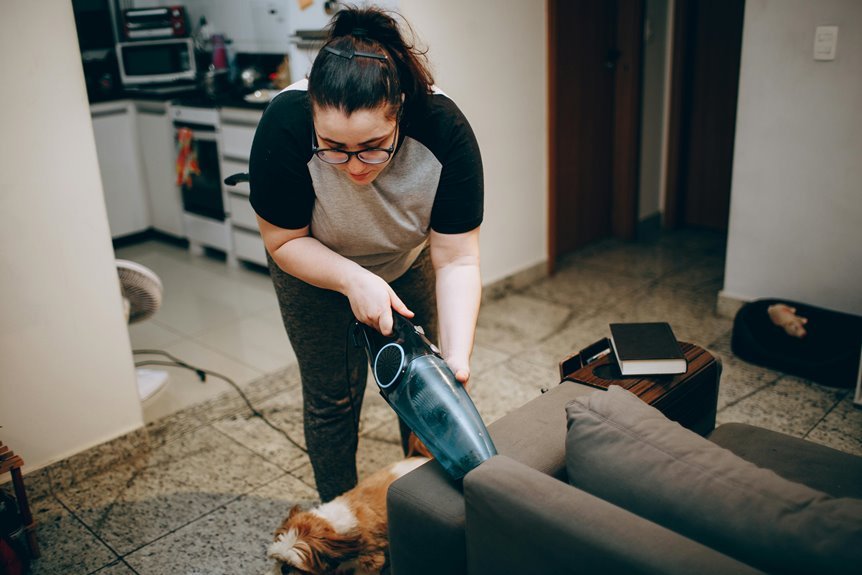

When you share your home with pets, fur builds up fast, so start with pet hotspots like couches, rugs, stairs, and beds before hair spreads to the rest of the house. Then match your vacuum to the floor type: use strong suction on carpet, make slower passes on tile, and turn the brush roll off on hardwood. Before you begin, pick up toys, blot damp messes, and check your vacuum for tangled hair, a full bin, or dirty filters, because a vacuum that is not working at its best will not keep up for long.
Focus Your Vacuuming on Pet Hotspots
When pet hair seems to show up everywhere at once, it helps to start where it builds the fastest. Begin with living room hotspots like couches, rugs, and the spots your pet claims as their own. These areas collect loose fur quickly, so you’ll see progress right away. That immediate improvement can make the whole home feel calmer and more cared for.
Next, move to pet beds, feeding zones, and play areas where hair mixes with tracked-in dirt. Then check corners, edges, and spaces under furniture, because fur drifts there and stays hidden. As you work, clean from top to bottom so fallen debris doesn’t undo your effort.
During heavy shedding, vacuum these busy zones daily. In calmer weeks, two or three passes through shared spaces usually keep your home comfortable, fresh, and welcoming for everyone.
Choose a Vacuum Built for Pet Hair
As you move from cleaning pet hotspots to choosing the right machine, focus on a vacuum with strong suction that lifts pet hair quickly. Look for a tangle-free brush design that picks up fur without creating a messy clog.
With the right vacuum, you can clean more easily and spend more time enjoying your pets.
Pet Hair Suction Power
Choose a vacuum with strong suction from the start, because pet hair doesn’t stay on the surface. It settles deep into carpet, rugs, and upholstery, where weak airflow leaves fur behind. When you prioritize strong suction, cleanup becomes easier and your home feels fresh, calm, and welcoming for everyone who spends time there.
As you compare models, pay close attention to suction performance on soft surfaces and in high-shedding areas like couches, pet beds, and stairs. You need a vacuum that maintains steady airflow while lifting hair, dander, and grit in fewer passes.
That matters because your routine already demands a lot. A machine with reliable power helps you stay ahead of messes without feeling overwhelmed. With the right suction, you aren’t chasing fur all day.
Tangle-Free Brush Design
For homes with pets, a tangle-free brush design can save time, reduce stress, and eliminate much of the frustration that comes with cleanup.
When you vacuum frequently, hair wraps quickly around a standard roller. That reduces pickup, restricts airflow, and leaves you with the unpleasant task of cleaning out the brush.
That is why it makes sense to look for anti-wrap mechanisms designed for fur. These systems guide hair directly into the bin instead of allowing it to twist around the brush. As a result, you get better contact with carpets, rugs, stairs, and pet beds.
You also spend less time cutting away trapped hair by hand. Just as important, tangle-free maintenance helps your vacuum maintain strong performance between cleanings.
If your home includes heavy shedders, this feature can make your routine smoother, faster, and far less frustrating each week.
Vacuum Pet Hair Before It Builds Up
When pet hair starts piling up, it spreads quickly, so it’s wise to vacuum before it settles into rugs, couches, corners, and pet beds. When you stay ahead of it, your home feels calmer, cleaner, and more comfortable for everyone who shares the space. A consistent vacuuming routine keeps fur from collecting into tumbleweeds, especially during shedding season when coats seem to burst overnight.
- A sunny rug dotted with fur near your pet’s favorite nap spot
- A couch corner where loose hair gathers like soft, drifted snow
- A pet bed surrounded by fluff after one playful afternoon
Begin with high traffic areas and pet zones. Vacuum daily during heavy shedding, or two to three times a week as your regular routine. This simple habit helps your home feel cared for, cozy, and truly lived in.
Adjust Your Vacuuming for Each Floor Type
Not every surface holds pet hair the same way, so you’ll get better results when you adjust your vacuuming for hardwood and tile, carpet and rugs, and stairs and upholstery.
You can protect each surface and pick up more fur by using the right setting, tool, and pace for the job. That way, your home feels cleaner faster, and you don’t have to work harder than necessary.
Hardwood And Tile
Because pet hair behaves differently on hard floors, you’ll get better results on hardwood and tile if you adjust both your vacuum’s setting and your pace. For hardwood care, turn off the brush roll to avoid scattering fur and scratching the finish. On tile cleaning days, use steady suction and slow, overlapping passes so hair, grit, and dander don’t slide away from the nozzle.
As you move through shared spaces, watch for the small messes your pets leave behind and address them promptly:
- Fine fur collecting along baseboards
- Grit and kibble crumbs settling in grout lines and along room edges
- Dusty paw prints gathering near doors, bowls, and favorite nap spots
Use a soft floor attachment when possible, and keep your pace steady so every room feels fresh and welcoming.
Carpet And Rugs
While hard floors let fur slide into view, carpets and rugs hold pet hair deep in the fibers, so you need stronger suction, the right height setting, and slower, overlapping passes to pull it back out. To stay ahead, vacuum every other day in busy pet zones, and increase frequency during shedding season. Adjust for deep carpet fibers and rug pile buildup by testing height settings and changing direction.
| Surface | Best Approach | Why It Helps |
|---|---|---|
| Low pile rug | Medium height, slow passes | Lifts surface fur fast |
| Plush carpet | Strong suction, higher setting | Reaches trapped hair |
| Area rug | Alternate directions | Breaks rug pile buildup |
| Entry rug | Vacuum often | Stops spread to shared spaces |
You get better pickup if you empty the dustbin often and keep the brush roll clear of wrapped hair.
Stairs And Upholstery
If pet hair clings to stairs and furniture, slow down and switch tools so you can lift it out instead of pushing it deeper into fabric. For stairs cleaning, use a stair tool or mini power brush, then make slow, overlapping passes from the top step down. This helps keep loose fur from drifting back onto areas where your family walks and gathers.
- A velvet chair releasing hair with each careful pass
- Carpeted steps looking fresher, tread by tread
- A sunny sofa corner free of dander and grit
For upholstery care, use strong suction with an upholstery tool and work in two directions. Focus on seams, edges, and cushions where fur collects. If your pet naps there daily, vacuum every other day. You aren’t chasing perfection.
You’re creating a cleaner, calmer place everyone can share.
Handle Pet Messes Before You Vacuum
Before you start vacuuming, take a minute to handle pet messes that can clog the machine or smear across the floor. In a busy pet home, that small step helps your space feel fresher and easier to manage. Always clean spills before vacuuming so moisture doesn’t turn hair, dust, and litter into a sticky mess. Whenever your pet has an accident, bag pet waste promptly and wipe the area thoroughly.
Next, check for damp food bits, muddy paw prints, scattered litter, and chewed scraps around bowls, beds, and doors. Pick up toys, move light items, and blot wet spots with paper towels or a cloth. When needed, let the area dry before you vacuum.
This protects your machine, reduces odors, and helps keep your home welcoming for everyone who shares it.
Clean Your Vacuum to Keep It Working
Keep your vacuum working at its best by cleaning it regularly. Pet hair can block airflow quickly and cause even a powerful machine to lose suction. Consistent care helps your vacuum perform well and keeps your home cleaner. Empty the bin before it becomes overfilled, and remove wrapped hair from the brush roll so suction remains steady.
Next, inspect the parts where buildup often collects:
- A filter coated with gray dust and fuzz can restrict airflow, so filter replacement helps restore performance.
- A hose packed with clumps of hair can reduce suction, so regular hose maintenance removes clogs and improves power.
- A clean roller can lift hair from rugs more effectively instead of pushing it across the surface.
Check the seals, wipe the canister, and replace bags in bagged models before they’re completely full.
With regular maintenance, your vacuum will work more effectively for your household.
Frequently Asked Questions
How Can I Reduce Pet Dander Between Vacuuming Sessions?
Reduce pet dander between vacuuming sessions by using an air purifier daily, brushing your pet often, and washing bedding weekly. Wipe surfaces, wash blankets, and clean filters regularly to help your home feel fresher and more welcoming.
Are Robot Vacuums Safe for Anxious Pets?
Yes, robot vacuums can be safe for anxious pets if you account for their sensitivity to noise and movement and introduce the device gradually. Start slowly, run it during calm periods, and make sure your pet has space, distance, and reassurance.
When Do Pets Shed Most During the Year?
Pets usually shed the most in spring and fall, when seasonal shedding increases. Shedding patterns can vary by breed, so your pet may follow a different schedule. Many pet owners adjust grooming and cleaning routines during these times.
Should I Vacuum While My Pet Is Home?
Yes, you can vacuum while your pet is home if you protect their comfort and choose a calm time to clean. You can help them feel secure by vacuuming during quiet hours, clearing clutter, and introducing the noise gradually.
What Room Should I Clean First in a Pet-Friendly Home?
Start with the busiest pet zones. It is where you will immediately notice your home coming together. Begin with entryway clutter, high-traffic hallways, pet beds, couches, and rugs. Then clean corners, edges, and under furniture before moving on.
