
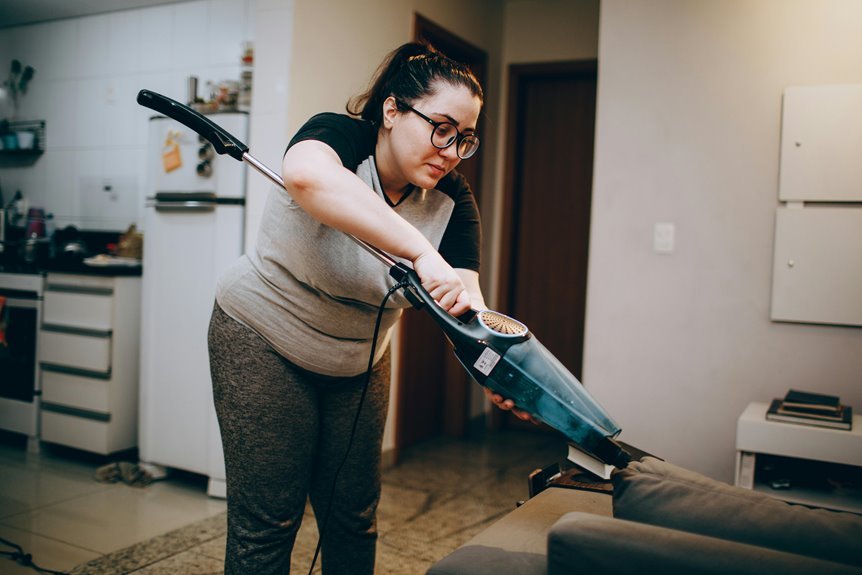

Like Goldilocks testing each step, you need the right touch as you vacuum around furniture, because one wrong pass can leave a mark you did not mean to make. Start by understanding your floor type, then check your vacuum’s wheels, brush roll, and tools for grit before you move chairs, guide the hose, and clean gently around legs with soft attachments and felt protection. The small habits that save your floors may surprise you.
Identify Your Floor Type First
Before you vacuum around furniture, identify the type of floor you’re cleaning. The wrong vacuum setting or attachment can leave marks more quickly than expected. Taking this step first helps you clean with confidence and keeps each room looking well cared for.
Begin by checking whether the floor is hardwood, tile, laminate, or vinyl, because each surface responds differently to suction and contact.
Next, match the attachment to the material. For hard floors, use a hard floor tool or a nozzle without a rotating brush. If a bare floor needs light agitation, choose a soft bristled attachment designed for that surface. Avoid stiff nylon bristles on wood, because they can scratch the finish.
When cleaning tight areas near furniture, use a crevice tool or extension wand so you can reach dust without dragging the vacuum body.
Check Vacuum Wheels and Brushes
Check Vacuum Wheels and Brushes
Once you’ve matched the right attachment to your floor, inspect the vacuum’s wheels and brushes closely. These small parts often cause the scratches you want to prevent. Begin with a quick wheel inspection. If you see hair, grit, or stuck crumbs, remove them immediately. Even small debris can scrape the surface like sandpaper.
Next, examine the brush roll. Regular brush roll maintenance helps the vacuum clean smoothly instead of dragging dirt across the floor. Make sure the brush spins freely, and cut away any wrapped hair or threads.
If your vacuum has a bare-floor setting, use it to reduce agitation on delicate surfaces. Also check for worn strips, rough edges, or cracked wheels. This isn’t unnecessary fuss. It’s a practical way to protect the floors that help your home feel clean and well cared for.
Move Light Furniture Safely
If you need a little more room to clean around table legs or side chairs, move light furniture with care instead of nudging it across the floor. Lift each piece from the strongest point, keep your back straight, and ask for help if it feels awkward. That small pause protects your floors and helps your space stay welcoming for everyone.
For safer furniture relocation, clear nearby clutter first, then place felt pads under the legs before setting pieces down again. You can also reposition lightweight items by lifting one side at a time and stepping slowly, rather than twisting or dragging.
If you’re moving lamps, baskets, or small stools, place them in a grouped spot so the room still feels calm and organized. These simple habits help you clean with confidence and keep your home looking well cared for.
Use the Right Attachment
Because the wrong vacuum head can quickly turn a simple cleanup into a flooring issue, choosing the right attachment matters as much as your technique. For hardwood, tile, laminate, or vinyl, use hard floor attachments or a nozzle without a rotating brush. This simple change helps protect the finish and gives you confidence as you care for your space.
If you need additional lift, choose a soft bristled brush roll or a bare floor setting instead of stiff nylon bristles. Those rough bristles can leave marks you don’t want to discover later.
For tighter areas, use the crevice tool to clean edges, baseboards, and narrow gaps beside furniture. Then detach the hose and use an extension wand to reach underneath larger pieces. You’ll clean more thoroughly, and your floors will keep the polished look that makes your home feel well cared for.
Vacuum Around Furniture Legs Carefully
While tight spaces around chair and table legs can feel awkward, you can clean them safely whenever you slow down and use the hose or crevice tool instead of pushing the main vacuum head into every gap. That simple switch gives you better control and protects the floor finish your home depends on.
Next, focus on chair leg clearance by guiding the tool around each leg in short, steady passes. Keep the nozzle slightly above the floor when turning, so trapped grit doesn’t scrape the surface.
For smoother furniture leg maneuvering, move small decor aside beforehand and watch your angle as you circle each base. If dust clings near joints or stretchers, pause and approach from another side. You’ll get a cleaner result, and your space stays welcoming, polished, and cared for every single day.
Vacuum Under Furniture Without Dragging
To clean under furniture safely, use a low-profile floor tool or extension wand so you can reach deep without forcing the vacuum head in.
As when working carefully around furniture legs, lift the vacuum whenever you change position or attachments instead of dragging it across the floor. This simple habit helps protect the finish, prevent scuffs, and make tight spaces easier to clean.
Use Low-Profile Attachments
Use low-profile attachments to reach under furniture safely. Don’t force the main vacuum head into spaces that are too tight. Switching to a low-profile tool gives you better control and helps protect the floors in your home. Choose slim vacuum tools that slide under sofas, beds, and cabinets without bumping wood trim or scraping delicate surfaces.
For delicate floors, use a hard-floor tool or a nozzle without a rotating brush. If you need extra pickup, choose a soft-bristled option designed for bare floors. A crevice tool helps clean tight edges near furniture legs and baseboards.
An extension wand helps you reach farther while keeping your movements calm, steady, and precise. This approach helps you clean carefully and protect the space.
Lift, Don’t Drag
Lift the vacuum body or floor head instead of dragging it around chair legs, table bases, and low furniture edges. This simple habit helps protect your floors from scuffs, keeps grit from scraping the finish, and leaves your home looking well cared for. When you need to turn, pause and lift the vacuum parts fully, especially near tight corners and delicate trim.
Next, unhook the hose and carry the attachment tools into place instead of pushing the main unit forward. You can reach farther under sofas, beds, and cabinets while reducing contact with the floor.
Use slow, controlled passes and guide the wand from the outer edge inward. If something feels tight, stop and reposition. These careful techniques are practical habits that help protect floors week after week.
Slow Down Near Edges and Baseboards
As you get close to edges and baseboards, slow your pace and switch to more careful passes. That small adjustment helps you stay in control around trim, chair legs, and tight corners where bumps happen quickly. You aren’t just moving through the room. You’re building cleaning habits that help your home feel cared for and welcoming.
- Use the crevice tool so dust lifts out of seams instead of being pushed along.
- Make slow edge passes in straight lines, with light overlap, so you catch grit without scraping.
- Guide turns along the baseboard with your wrist, not sudden swings, to avoid tapping the trim.
- Pause near furniture feet and narrow gaps, then move forward with steady suction and a controlled hand.
That gentler rhythm keeps every pass neat, confident, and careful.
Protect Hardwood Floors Around Furniture
To protect hardwood floors around furniture, start with simple safeguards that prevent scuffs before they happen. Add floor guards to furniture legs, use a soft brush vacuum head designed for bare floors, and clean edges with gentle, controlled passes. This helps remove dust in tight spots without grinding grit into the finish or scratching the wood.
Furniture Leg Floor Guards
A simple set of furniture leg floor guards can protect hardwood from the small scratches that build up during vacuuming. When you clean around chairs, tables, and sofas, these barriers help each piece glide instead of scrape. This lets you keep your space tidy without worrying every time you move around furniture.
- Slip on furniture leg guards to cushion movement.
- Choose floor protector caps that fit snugly and stay in place.
- Check guards often for trapped grit, since dirt can still mark wood.
- Replace worn pads early, so your home keeps its well-maintained look.
This small upgrade helps your rooms feel welcoming, polished, and properly lived in. You deserve floors that stay beautiful while your home remains active, warm, and shared every day.
Soft Brush Vacuum Heads
Because hardwood shows every little scuff, a soft brush vacuum head gives you a safer way to clean around furniture without the tense feeling that something could scrape the finish. You want an attachment that helps you care for your home with confidence, not worry.
That’s where smart soft brush selection matters. Choose a hard floor head with natural or very soft bristles, and avoid stiff nylon that can leave marks. If your vacuum offers gentle brush agitation, keep it low so dust lifts while the finish stays protected.
Also, check the head often for trapped grit, since tiny particles can act like sandpaper. A clean, soft head glides better around chair legs, table bases, and sofas. With the right tool, you can keep every room polished, welcoming, and comfortably lived in.
Safe Edge Cleaning Techniques
Soft brush heads protect the open floor, and the same gentle approach matters even more along edges near furniture, where grit can hide and vacuum parts may bump the finish.
Smart floor perimeter care helps your home feel well kept and welcoming. Try these habits:
- Switch to a crevice tool or hard floor nozzle before you reach chair legs, trim, or table bases.
- Unhook the hose and use an extension wand so you can reach under furniture without dragging the vacuum body.
- Move in slow, straight passes along baseboard edges, and overlap slightly to lift hidden grit.
- Lift the vacuum when changing tools or direction, because sliding wheels and dirty brushes can act like sandpaper.
With these steps, you can clean close to the edges, work carefully, and protect the wood your family gathers on.
Clean Around Chairs and Tables Gently
As you vacuum around chairs and tables, slow, careful movement protects the floor better than speed. Start by moving lightweight pieces aside so you have better chair clearance and can reach dust near each leg without bumping wood or metal. If a table stays in place, switch to a hard-floor attachment and guide it in straight, steady passes around the feet.
Then use the crevice tool or extension wand to clean tight spots under seats and around the table base clearance. Keep the vacuum body behind you and let the hose handle the close work. This helps the room feel cared for, not wrestled with.
If grit gathers where everyone sits together, lift it first with a microfiber cloth. You’ll keep shared spaces cleaner, calmer, and welcoming for everyone who calls this place home.
Avoid Mistakes That Scratch Floors
Although vacuuming may seem harmless, a few small mistakes can leave noticeable marks on your floor. When you slow down and make careful choices, you help protect the space that makes your home feel welcoming. Good floor protection begins with simple habits, not force.
- Pick the right attachment. Use a hard floor tool, soft bristles, or a crevice tool instead of stiff brushes.
- Lift, don’t slide. When you switch tools or reach under furniture, carry the vacuum body to prevent scuffs.
- Watch for hidden grit. Clean entry areas first, and remove loose debris before vacuuming so particles don’t grind under the wheels.
- Move with care. Vacuum in straight, steady lines, and overlap slightly around furniture legs.
These choices support effective floor care maintenance and help everyone in your home enjoy scratch-free floors.
Maintain Your Vacuum for Safer Cleaning
To keep your floors safe, check your vacuum’s wheels often and make sure they’re free of grit that can cause scratches while you clean.
Clean the brush attachments as well, so trapped hair, dust, and small debris don’t drag across the floor like sandpaper.
If any parts look worn, replace them promptly so your vacuum continues to move smoothly around furniture without leaving marks.
Check Wheels Regularly
Regularly checking your vacuum’s wheels helps protect your floors, and it’s an easy step to overlook. Tiny bits of grit can hide in the wheels, then scrape wood or laminate as you move around table legs and sofas.
That’s why wheel maintenance matters so much in a home that feels cared for.
- Look closely for hair, sand, or crumbs stuck around each wheel.
- Spin each wheel with your fingers to make sure it turns smoothly.
- Wipe the wheels with a soft cloth so trapped dirt doesn’t act like sandpaper.
- Replace cracked wheels, or choose non marking casters if your current ones leave scuffs.
When you keep the wheels clean and rolling well, your vacuum glides smoothly and helps protect your floor.
This small habit helps your whole space feel protected.
Clean Brush Attachments
Clean wheels help your vacuum glide, and clean brush attachments protect the floor where that vacuum lands. When you stay on top of brush maintenance, you keep concealed grit, hair, and crumbs from rubbing your finish like sandpaper. Before you start, check that each tool is clean and suited to your floor.
| Attachment | Best use |
|---|---|
| Hard-floor tool | Hardwood, tile, laminate |
| Soft brush roll | Gentle bare-floor pickup |
| Crevice tool | Edges, legs, tight gaps |
Good attachment care also means lifting the vacuum when you switch tools, rather than dragging it. Use the crevice tool near furniture legs, and use a hard-floor head under tables. If your brush roll spins, make sure it turns freely and stays clear of trapped debris, so your cleaning routine remains safe and practical for homeowners who value careful floor care.
Replace Worn Parts
Even with the right attachment in place, worn vacuum parts can still put your floors at risk. To keep your cleaning routine safe for flooring, replace worn components before they drag, scrape, or leak grit across the surface. This simple maintenance step helps protect your home and keeps your vacuum performing as it should.
- Check wheels for flat spots, cracks, or stuck debris that can leave marks on wood and vinyl.
- Inspect seals around the head and hose for damage, because leaks can drop grit where furniture edges trap it.
- Replace frayed brush strips and rough sole plates so the vacuum glides smoothly instead of scuffing the floor.
- Change worn parts such as pads, rollers, and edge guards on schedule, especially if you vacuum every week.
When your vacuum moves smoothly, you can clean with more confidence and help protect the surfaces throughout your home.
Frequently Asked Questions
How Often Should High-Traffic Floors Be Vacuumed Between Full Cleanings?
Vacuum high-traffic floors every two to three days between full cleanings. This helps protect finishes, control grit, and keep your home welcoming. Add this frequency to your cleaning schedule so you can stay on top of messes with confidence.
Can Vacuuming Help Reduce Allergens Trapped in Upholstered Furniture?
Yes, you can reduce allergens trapped in upholstered furniture. For more effective allergen reduction, vacuum cushions, seams, and undersides regularly with upholstery cleaning tools, so your home feels fresher and more welcoming.
What Should I Do Before Vacuuming if the Floor Is Wet?
Before vacuuming, dry the floor completely and make sure the vacuum is safe to use. This helps protect your floors and supports good cleaning habits by wiping up spills first, removing grit, and waiting until the surface is fully dry.
Are Entryway Mats Really Effective at Reducing Floor Scratches?
Yes, they are highly effective. Smart mat placement at every entrance can significantly improve scratch prevention, because quality mats reduce the amount of dirt and debris tracked indoors. When used consistently, they help protect your floors and support a cleaner, more welcoming home.
Should I Vacuum in One Direction or Multiple Directions Under Furniture?
You should vacuum under furniture in multiple directions, not just one. This stroke pattern lifts trapped dust more effectively. For safer, more thorough results, follow furniture clearance tips, start at the edges, use slow passes, and overlap slightly.
