
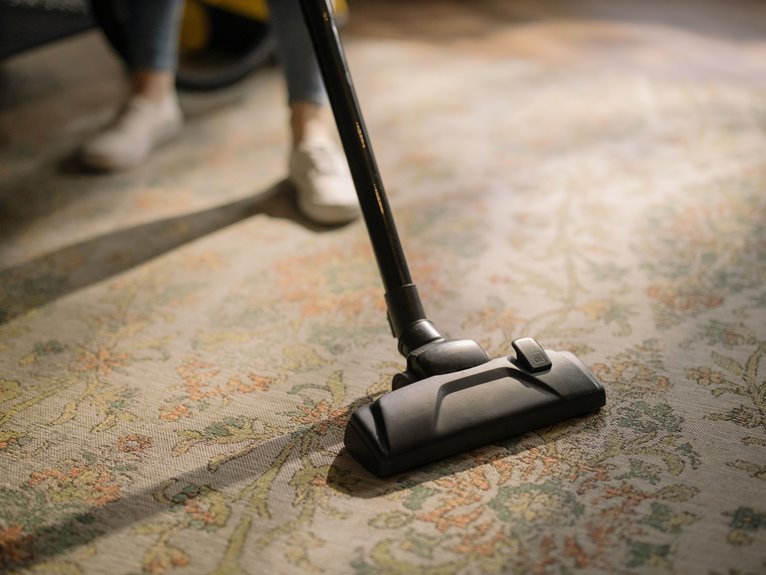

Fine dust can settle into your carpet like flour sinking into a thick sweater, and if it feels like it keeps coming back no matter what you do, you’re not imagining it. You can remove much more of it when you use the right vacuum, adjust the height correctly, loosen trapped grit first, and vacuum with slow, overlapping passes that pull dust out instead of pushing it deeper. Once you understand where most people go wrong, the process becomes much easier.
Remove Fine Dust From Carpets Step by Step
Before you try any deep cleaning method, start by vacuuming the carpet slowly with strong suction and a HEPA filter. This initial pass removes loose fine dust and helps prevent it from being pushed deeper into the fibers.
Next, follow a step by step routine to help your whole home feel fresher. Sprinkle baking soda across the carpet and let it sit for 30 minutes, so it can loosen dusty buildup and absorb odors. Then vacuum again using slow, overlapping strokes, paying extra attention to edges, corners, baseboards, and high traffic areas. After that, gently brush the fibers to lift trapped particles without damaging the pile. If dust still lingers, deep clean with your carpet machine and follow the label directions. Respect the post cleaning dry time before walking on the carpet again.
Choose a Vacuum That Traps Fine Dust
Start with a vacuum that has a HEPA filter, because it helps trap the tiny dust particles you can’t see.
You’ll also get better results with a sealed system, since it keeps fine dust from leaking back into your room.
Strong suction is just as important, because it pulls dust from deep in the carpet and makes cleaning more effective.
HEPA Filtration Benefits
Whenever you’re handling fine dust, the vacuum you choose matters just as much as how often you clean. A HEPA filter helps you feel confident because it’s designed to capture tiny particles that ordinary filters might release back into the air. That means cleaner carpet, fresher air, and better allergen reduction for everyone sharing your space.
With strong suction, you give your carpet a real reset, not just a quick tidy. You’ll notice the difference whenever you vacuum slowly and cover the room carefully.
- Fine dust stays trapped instead of floating back into the room
- Allergy-triggering particles are removed more effectively
- Rooms feel calmer, cleaner, and more welcoming to your household
Whenever you want your home to feel truly cared for, a HEPA-filter vacuum helps you clean with confidence every day.
Sealed System Design
A HEPA filter does an excellent job of capturing fine dust, but that protection is most effective when the vacuum also has a sealed system.
Without a sealed system, fine particles can escape through gaps around the body, hose, or bin and recirculate into the room. As a result, your carpet may look cleaner, but your shared occupied space may not feel as fresh.
Strong Suction Performance
Because fine dust settles deep into carpet fibers, you need a vacuum with strong, consistent suction to remove it instead of only cleaning the surface. Reliable suction helps improve cleaning results in the areas where dust collects most.
- Move slowly so the vacuum can lift grit from high traffic walkways and entry areas.
- Overlap passes in two directions so more dust is removed from the carpet pile.
- Pay close attention to edges, corners, baseboards, and under furniture where fine dust tends to gather.
To get the most from that suction, choose a vacuum with a HEPA filter and sealed airflow. This helps prevent tiny particles from circulating back into the room.
With the right machine, your carpet feels fresher, cleaner, and better maintained every day.
Use the Right Vacuum Height and Settings
Two simple setting changes can help your vacuum remove much more fine dust from carpet. First, adjust the vacuum height correctly. If the head sits too low, airflow drops. If it rides too high, dust stays behind. Match the carpet pile setting to the rug’s depth so the brush and suction work together. This small change can help your whole home feel cleaner.
| Setting | Best move |
|---|---|
| Low pile | Lower height |
| Medium pile | Middle height |
| High pile | Higher height |
| Suction | Keep it strong |
| Brush roll | On for most carpets |
Next, slow down and pay attention to how the vacuum sounds and feels. It should glide with light resistance, not fight you. When it moves smoothly, your settings are likely correct, and you are cleaning in a way that supports a well cared for space.
Loosen Dust Before You Vacuum
Before you start vacuuming, loosen the dust trapped deep in the carpet so your vacuum can remove more of it. This simple step helps the whole room feel fresher, cleaner, and better maintained.
Try these dust loosening methods before you vacuum:
- Use a carpet rake, rubber broom, or soft brush to lift packed dust from the carpet pile.
- Sprinkle baking soda lightly, let it sit for about 30 minutes, and allow it to draw fine dust upward.
- Gently brush traffic paths, entry areas, and spots near furniture where dust tends to settle.
This type of pre-vacuum agitation lifts flattened fibers and releases hidden particles. You don’t need to use harsh force. A steady, gentle touch works best and helps protect your carpet. When you prepare the surface well, every cleaning session becomes more effective.
Vacuum Slowly in Both Directions
Now that you’ve loosened the trapped dust, vacuum slowly in both directions to pull more debris out of the carpet instead of leaving it buried in the fibers. Move the vacuum forward at a steady pace, then bring it back just as slowly. This method gives the suction enough time to lift fine particles from deep in the carpet.
Then change direction and vacuum across the same area from another angle. Dust settles between fibers, so crossing over the area helps remove what a single pass can miss. Use overlapping stroke patterns so each path slightly covers the last one. This prevents narrow strips from being skipped.
Take extra time in high traffic areas, near entryways, and along furniture edges. A few careful passes can leave your carpet cleaner, fresher, and better maintained.
Remove Dust From Thick Carpet Pile
Thick carpet pile can trap fine dust deep below the surface, so use slower, deeper vacuum passes to lift it out.
After the initial pass, loosen embedded dust with a carpet rake, rubber broom, or soft brush so the vacuum can remove more of it.
This extra step helps clean the fibers more thoroughly, especially in dense areas where dust tends to collect.
Deep Vacuum Passes
Often, the biggest dust problem in a thick carpet pile isn’t what you can see on top, but what sits deep between the fibers, so your vacuum needs slow, deep passes to pull it out. When you move too fast, dust stays concealed. Instead, guide the vacuum with slow, overlapping passes, then change direction to lift more from every side of the pile.
To make each pass count, work with a deliberate, methodical approach:
- Move row by row, letting strong suction reach deep instead of skimming the surface.
- Pause at baseboards and corners, giving extra attention to edges where fine dust collects.
- Revisit doorways and high traffic areas, because the busiest spots need more care and patience.
Loosen Embedded Dust
After those slow vacuum passes, it helps to stir up what’s still hiding deep in the pile. That’s where gentle carpet agitation makes a real difference. You can use a carpet rake, rubber broom, or soft, stiff brush to lift packed dust toward the surface. Work in short strokes, then change direction so the pile opens up and trapped particles break free.
As you loosen the fibers, you improve fiber release without roughing up the carpet. Go easy, especially on plush or older carpet, and focus on busy spots like entryways and under chairs where people gather. If you’re cleaning a small rug, take it outside and give it a few firm shakes or light taps. Then vacuum again and collect what the carpet released.
Clean Dust From Low-Pile Carpet
Because low-pile carpet doesn’t trap dust as deeply as thicker carpet, you can usually remove fine particles faster by starting with a vacuum that has strong suction and a HEPA filter. Move slowly so the vacuum lifts more dust from the low-pile texture instead of skimming over it. Because carpet fiber density still affects how dust settles, make overlapping passes in two directions for a more complete clean.
To make the room feel truly cared for, give extra attention to spots your household uses every day:
- entryways where shoes and outdoor grit first land
- edges, baseboards, and corners where fine dust gathers
- paths near sofas, beds, and tables where traffic stays steady
Then guide the vacuum carefully along furniture edges and transition zones. This will leave your carpet looking fresher and feeling more welcoming.
Lift Carpet Dust With Baking Soda
After your initial vacuum pass, sprinkle baking soda evenly across the carpet to help draw fine dust up from deep within the fibers.
Let it sit for about 30 minutes, because the extra time helps loosen hidden dust and absorb stale odors. Then vacuum slowly and thoroughly with strong suction, and you’ll remove more powder, dust, and grit with less effort.
Sprinkle Evenly
If fine dust seems stuck deep in the carpet, a light, even layer of baking soda can help bring it closer to the surface before you vacuum. You don’t need heaps. Instead, aim for an even dusting across the area so each section gets the same support. Good powder distribution helps you treat the carpet as one shared surface, not a patchwork of missed spots.
As you sprinkle, imagine the room coming back together:
- A soft, light coating settling across the fibers, not clumping into little hills
- Your hand moving steadily from one side to the other, covering traffic lanes and edges
- A fresh, cared-for carpet that feels ready for the next step
Use a shaker jar, sieve, or your fingers to control the flow. Keep the layer light, balanced, and easy to vacuum up later.
Let It Sit
Let the baking soda sit for about 30 minutes so it has time to work. This dwell time allows the powder to settle into the carpet fibers, loosen fine dust, and absorb stale odors. There’s no need to disturb it. Leave the room undisturbed and let the treatment do its job.
During this time, keep people and pets off the area so the baking soda remains evenly distributed. This helps every section of the carpet receive the same treatment. If the carpet is slightly damp from an earlier step, allow for drying time as well. Baking soda works best when it doesn’t clump or turn pasty. A short pause here makes the next step more effective and much less messy.
Vacuum Thoroughly
Next, vacuum the carpet slowly and thoroughly to remove the baking soda along with the fine dust it has loosened. Use strong suction and, if possible, a HEPA filter so tiny particles stay trapped instead of circulating back into the room. Slow, overlapping passes improve deep cleaning, especially after the powder has had time to settle and absorb dust.
- Move the vacuum forward and back, then change direction to lift dust from every side of the carpet fibers.
- Pay extra attention to edges near baseboards, corners, and under furniture where fine dust often collects.
- Spend more time on entryways, doorways, and other high traffic areas since they gather dust more quickly.
You aren’t just cleaning the carpet.
You’re refreshing a shared space that helps everyone feel comfortable and at home.
Spot Clean Dust Without Soaking the Carpet
Whenever fine dust settles in a small area, you do not need to soak the carpet to remove it. After vacuuming, use dry spot cleaning and minimal moisture to lift residue gently. Sprinkle a small amount of baking soda over the area, wait ten minutes, then blot with a barely damp microfiber cloth. Do not rub hard, because that can push dust deeper into the fibers. This approach keeps the carpet clean without unnecessary moisture.
| What to use | How to use it |
|---|---|
| Baking soda | Sprinkle lightly |
| Microfiber cloth | Blot, do not scrub |
| Soft brush | Loosen fibers gently |
| HEPA vacuum | Finish with slow passes |
If dust still clings, brush the spot gently and vacuum again. Treat the area lightly so you can remove residue without overwetting the fibers or creating more cleanup later.
Clean Dust Along Carpet Edges
After you’ve handled small dusty spots, give extra care to the carpet edges because fine dust often collects where the vacuum misses. Start with strong suction and a HEPA filter, then work slowly so you can reach baseboard dust and corner buildup without sending it back into the room. This helps create a cleaner, more comfortable space.
- Use the crevice tool where the carpet meets the wall, and make slow, overlapping passes.
- Pull light furniture out slightly so hidden edge dust doesn’t stay tucked away.
- Wipe baseboards first with a microfiber cloth so loosened dust doesn’t fall back into the carpet.
Then vacuum the edge lines again from two directions. That extra minute can make the whole room feel fresher and better maintained.
Clean Fine Dust From Rugs and Stairs
Whenever you clean rugs and stairs, you need the right dust removal tools and a method that reaches deep into tight fibers. You’ll get better results when you vacuum slowly with strong suction, use a HEPA filter, and give stair corners, edges, and high traffic areas extra attention. To keep fine dust from returning quickly, use entry rugs, follow a no shoes policy, and clean rugs regularly to stop dust at the source.
Dust Removal Tools
Often, the right dust removal tools make rug and stair cleaning much easier because fine dust settles deep into fibers and collects along edges.
You’ll get better results when you match the tool to the type of dust. Start with a vacuum that has strong suction and a HEPA filter, then use carpet agitation tools to lift what sits below the surface.
- A HEPA vacuum traps tiny particles and cleans edges, corners, and high traffic areas effectively.
- A carpet rake, rubber broom, or stiff brush loosens embedded dust so your vacuum can remove more.
- Baking soda helps draw dust upward and freshens fibers before you vacuum again.
If your rug still feels dusty, a carpet cleaner or steam cleaner can remove what daily tools miss.
With the right dust removal tools, your home feels cleaner and more welcoming.
Stair Cleaning Methods
Stairs need a more careful approach because fine dust settles into each tread, packs into corners, and clings along the edge where the riser meets the step. Start by vacuuming slowly with strong suction and a HEPA filter, so you lift stair tread dust instead of pushing it deeper.
Use overlapping passes from front to back and side to side. Then switch to the hose or crevice tool for buildup in corners, along edges, and around trim. If dust still hides in the fibers, loosen it gently with a soft brush or rubber broom, then vacuum again.
For heavier dust, sprinkle baking soda over the stairs, let it sit for about 30 minutes, and vacuum thoroughly. When your stairs need more attention, deep clean them with a carpet machine and let them dry fully before anyone uses them.
Rug Dust Prevention
Even small rugs can hold a surprising amount of fine dust, so prevention matters just as much as cleaning. When you stop dust at the door, your rugs stay fresher, and your home feels more welcoming for everyone.
- Use layered entry mats, with a coarse mat outside and a softer rug inside, to catch gritty dust before it spreads.
- Build shoe free habits at home, especially near stairs and entryways, so less fine dust gets ground into fibers.
- Vacuum rugs slowly with strong suction and a HEPA filter. Give extra attention to edges, corners, and high traffic paths.
For stair runners and small rugs, shake out loose dust outside when possible, then vacuum in overlapping passes.
If dust lingers, sprinkle baking soda first, wait 30 minutes, and vacuum again.
Avoid Mistakes That Trap Dust
Because fine dust settles deep into carpet quickly, common cleaning mistakes can trap it instead of removing it. If you want floors that look cleaner and feel fresher, avoid vacuuming habits and other dust trapping routines that work against you.
Start by slowing down. Quick passes miss buried particles, especially in high traffic areas. Use strong suction and a HEPA filter, then overlap your strokes from different directions. Don’t ignore edges, corners, or areas near furniture. Dust collects there and can spread back into the carpet.
If you use baking soda, let it sit long enough, then vacuum only after the carpet is completely dry. When deep cleaning, allow plenty of drying time and avoid walking on damp fibers too soon. Gentle brushing can also help loosen dust instead of pushing it deeper into the pile.
Keep Dust Out of Carpets Longer
Often, the best way to fight fine dust is to stop it before it reaches your carpet. When you focus on dust entry prevention each day, you create a cleaner, more welcoming home. Small habits help your space feel cared for, and everyone who walks in notices.
- Place a rough mat outside and a softer rug inside, so shoes drop grit before it spreads.
- Ask family and guests to remove their shoes at the door, which improves carpet dust control quickly.
- Vacuum entry zones, baseboards, and nearby hard floors often, so loose dust doesn’t drift back into carpet fibers.
Also, keep furniture edges and corners tidy, because hidden dust can travel. You don’t need perfection. You just need consistent routines that help your home feel fresh, comfortable, and easier for everyone to enjoy each day.
Watch for Signs Your Carpet Needs Deep Cleaning
While regular vacuuming keeps daily dust under control, your carpet will still show when it needs a deeper clean. You might notice dull fibers, flattened traffic paths, or dust that returns quickly after vacuuming. These are early signs that fine particles are settling deep below the surface.
As dust builds up, your carpet may start to feel gritty underfoot, especially near entryways and around furniture edges. You may also notice staining signs, such as darkened lanes or small marks that remain after spot cleaning. Odor buildup can also point to trapped dust, moisture, and debris hidden in the pile.
If allergies seem worse when you spend time in the room, take notice. That shared space should feel fresh, soft, and welcoming again, not tired, stuffy, or in need of attention.
Frequently Asked Questions
How Often Should Carpets Be Deep Cleaned for Fine Dust Control?
Deep clean carpets every few months for better fine dust control, and at least once a year for thicker carpets or areas with heavy use. Choose a cleaning schedule that fits your home, and support it with seasonal carpet care.
Can Air Purifiers Help Reduce Fine Dust Settling Into Carpets?
Yes, the theory holds. Air purifiers can reduce the amount of fine dust that settles into carpets. Place the unit strategically, especially near entry points, and maintain the filter regularly. These steps can also help improve overall indoor air quality.
Do Pets Make Fine Dust Buildup in Carpets Worse?
Yes, pets can worsen fine dust buildup in carpets because they shed dander, hair, and tracked-in debris. You can reduce pet dander and other indoor allergens by vacuuming often, grooming regularly, and using entry mats.
Should Shoes Be Removed Indoors to Keep Carpet Dust Lower?
Yes, you should remove shoes indoors because it reduces the amount of dust tracked inside and helps keep carpets cleaner. Establish consistent entryway habits, provide indoor footwear, and create a welcoming home that feels well cared for.
When Should a Carpet Be Professionally Cleaned Instead of DIY?
Choose professional cleaning when DIY methods seem to help, but dust, odors, or stubborn stains still remain. If your carpet feels like it has become a collection point for family dirt, professional cleaners can deliver safer, deeper results.
