
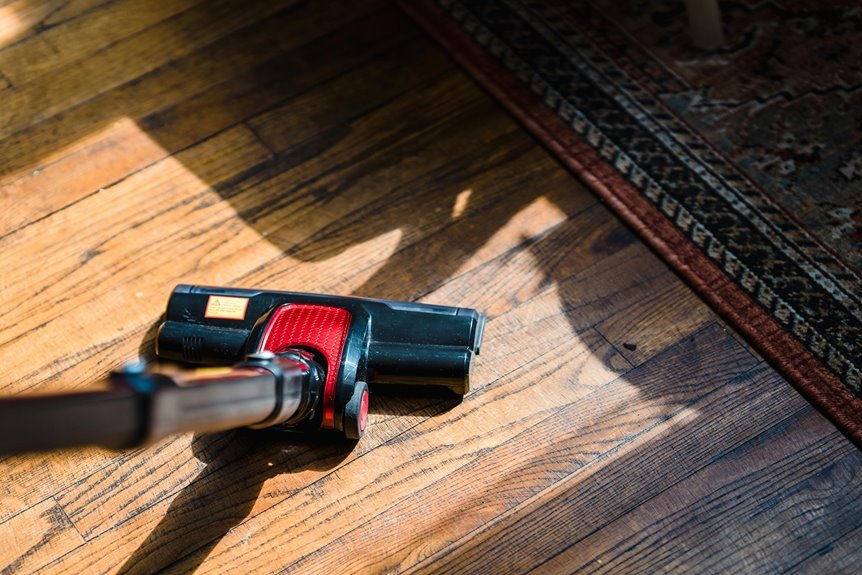

When choosing a vacuum for hardwood floors, look beyond strong suction. A soft roller or a brush roll that can be switched off helps protect the surface, and smooth wheels reduce the chance of marks. Choose the vacuum type based on your home: an upright works well in wide rooms, a canister is useful for stairs, a cordless model handles quick pickups, and a corded model provides consistent power. After you consider pets, room size, and overall weight, it becomes much easier to identify the wrong vacuum.
What to Look for in a Vacuum for Hardwood Floors
When you’re choosing a vacuum for hardwood floors, start with the parts that actually touch the wood, because that’s where effective cleaning and floor protection come together. Look for strong surface compatibility, such as a soft roller, fluffy cleaner head, or soft bristle brush. You’ll also want a brush bar on and off switch and a bare floor mode, so you can clean with confidence without worrying about scratches.
Next, pay attention to suction control, because hardwood requires balance. You want enough suction to lift dust and crumbs, but not so much that the vacuum sticks or pushes debris around. Adjustable suction helps protect delicate finishes and makes it easier to handle different types of messes.
If your home has more than one floor surface, automatic floor sensing can help you move from room to room with ease.
Choose the Best Vacuum Type for Hardwood Floors
As you choose between an upright and a canister vacuum, consider how easily each option moves around furniture and how well it protects your hardwood from scuffs.
You should also decide whether the steady power of a corded model suits your cleaning routine, or whether the lighter, faster feel of a cordless vacuum makes daily pickup easier.
As you compare these options, keep your floors in mind so you don’t trade convenience for scratches, noise, or poor dust control.
Upright Vs. Canister
Although both upright and canister vacuums can clean hardwood well, the better pick depends on how your home is laid out and how much control you want over the cleaner head.
If you like simple storage and familiar upright handling, an upright might feel right at home. It works well in open rooms and often provides a wide cleaning path.
If your space has stairs, tight corners, or lots of furniture legs, a canister vacuum can make your routine feel easier and less stressful. You guide a lighter wand, so you can reach under chairs and around table bases with more precision.
In either style, choose a soft roller or soft bristle head, rubber wheels, adjustable suction, and a brush bar shutoff. That way, your floors stay clean, calm, and part of the home you love.
Corded Or Cordless
When you want the easiest choice for your routine, start by considering how often you clean and how much space you cover in one go. If you do quick daily passes, cordless feels freeing and easy to grab. If you clean larger rooms, corded gives more consistent power and supports longer sessions.
| Type | Best for | Watch for |
|---|---|---|
| Cordless | Quick touch-ups | battery life |
| Corded | Whole-home cleans | outlet reach |
| Both | Mixed needs | floor-safe head |
You will likely prefer cordless if speed, light weight, and easy storage matter most. Still, corded models usually deliver stronger suction for grit and pet hair on hardwood. Whichever you choose, look for a soft roller, adjustable suction, and rubber wheels so your floors stay beautiful and your cleaning routine stays easy.
Pick Features That Protect Wood Floors
Because hardwood can scratch more easily than carpet, choose features that clean effectively without being harsh on the finish. The right vacuum helps you care for your home with confidence, so your floors stay beautiful and welcoming every day.
- Choose soft rollers or a fluffy cleaner head. They lift dust and crumbs gently while helping protect the surface.
- Look for adjustable suction or a hard floor mode. This gives you strong pickup without the vacuum gripping too hard on delicate boards.
- Pick a lightweight vacuum with smooth steering and a wide base. It’s easier to guide around furniture and more comfortable to use.
- Prioritize HEPA or sealed filtration. This helps keep fine dust contained, so your rooms feel fresher, cleaner, and more comfortable for everyone at home.
Avoid Brush Rolls and Wheels That Scratch
When you’re vacuuming hardwood, one rough brush roll or a set of hard plastic wheels can leave marks that are hard to ignore. To protect floors you love, choose a soft roller or soft-bristle head, and make sure the brush bar turns off on bare floors. That simple switch helps you avoid brush roll damage and keeps your space feeling cared for.
| Part | Better Choice | Why It Helps |
|---|---|---|
| Brush roll | Soft roller | Reduces scratching |
| Brush bar | On/off switch | Stops bristles on wood |
| Wheels | Rubber-coated | Supports wheel scuff prevention |
| Base | Smooth, wide base | Glides with less pressure |
Protective features matter, and contact points matter too. Rubber wheels glide more gently, so you can clean with confidence and keep your hardwood welcoming for everyone.
Choose Based on Pets, Stairs, and Room Size
The right floor head protects your hardwood, but your home’s layout and daily messes should guide the rest of your choice. If you share space with pets, choose strong pet hair control and sealed filtration, so fur and dander stay contained. For stair cleaning, a compact vacuum or long hose helps you move safely and reach edges without bumping walls.
- If you have pets, look for tools that lift hair from corners and along baseboards.
- If you clean stairs often, pick a design that feels steady in your hands.
- If your rooms are small, nimble movement helps you turn around furniture with less stress.
- If your home has large open areas, choose wide coverage and consistent suction, so cleaning feels easier and more connected to your routine.
Compare Price, Weight, and Maintenance
How much should you spend, and what do you really get for that money? As you compare models, think about price, weight, and maintenance. Then ask how often you will need to clean filters, cut hair from the brush roll, or replace bags. A lighter vacuum feels easier on stairs and around chairs, so everyone in the home can use it more comfortably.
| Budget | Weight | Maintenance |
|---|---|---|
| Low | Usually light | More frequent filter cleaning |
| Mid | Balanced | Better parts, fewer clogs |
| Premium | Varies | Easier upkeep, sealed systems |
These maintenance tradeoffs matter on hardwood. A soft roller, rubber wheels, and adjustable suction help protect floors, but they can increase the price. If you want quick weekly care, a lightweight stick model may fit your routine. If you want deeper cleaning and HEPA filtration, paying more can often save effort and reduce dust over time.
Frequently Asked Questions
How Often Should I Vacuum Hardwood Floors to Prevent Scratches?
Vacuum hardwood floors at least once a week, and more often in high-traffic areas, to reduce dust buildup and help prevent scratches. This simple routine helps protect your floors and keeps your home clean, polished, and welcoming.
Should I Vacuum With or Against the Wood Grain?
You should vacuum with the wood grain. This cleaning technique helps lift debris from tiny grooves, protect the finish, and keep your floors looking well cared for.
Are Bagged Vacuums Better for Hardwood Floor Allergy Control?
Yes, you will usually get better hardwood allergy control with bagged vacuums because bagged filtration improves allergen containment during emptying. This helps keep dust from reentering your space, making your home feel cleaner, calmer, and more comfortable.
Can Vacuuming Replace Sweeping on Hardwood Floors?
Yes, you can usually replace sweeping with vacuuming on hardwood if you use soft, safe settings. Maintain consistent dust removal habits, and you can improve dry debris pickup while avoiding scratches by removing larger grit first.
What Vacuum Noise Level Is Comfortable for Daily Use?
You’ll usually find 60 to 70 dB comfortable for daily use, especially when you want low noise operation in shared spaces. Aim for quiet decibel ratings under 75 dB, so your cleaning routine feels easy and considerate.
