

When managing a Honeywell RENEWRTH9585WF upstairs and a Mysa LITE downstairs, one thermostat will not work for every zone. The right setup depends on protocol support, local control, and per room scheduling.
In 2026, the best options are not just about app features, they are about matching each space to the system behind it, and some choices may be unexpected.





More Details on Our Top Picks
Honeywell Home RENEWRTH9585WF Wi-Fi Smart Color Thermostat (Renewed)
If you want a smart thermostat that is easy to manage across multiple zones, the renewed Honeywell Home RENEWRTH9585WF is a strong choice, especially if your home uses forced air, hot water, steam, or a heat pump system. It offers a bright touchscreen, color customization, and simple controls that make daily adjustments quick. ENERGY STAR certification can help reduce energy use, while monthly reports and personalized tips show where you may be able to cut heating and cooling costs. You can also program it for utility peak pricing. Keep in mind that you need a C-wire, and it is not suitable for electric baseboard heat.
- Connectivity:Wi‑Fi
- App Control:Yes
- Voice Control:No
- Scheduling:Programmable
- Display:Color touchscreen
- C-wire:Required
- Additional Feature:Energy reports
- Additional Feature:Color customization
- Additional Feature:Peak pricing programming
Breez Max Smart AC Controller WiFi Thermostat
The Breez Max Smart AC Controller WiFi Thermostat is a strong fit if you need per-zone control for mini-split, window, portable AC, or heat pump units that rely on IR remotes. You can pair one Breez Max per indoor unit, then sync modes or shut off other units to avoid clashes. Its AI Comfy Max, weekly schedules, geofencing, and presets help you automate comfort with no subscription. You also get app, voice, and touch control, plus temperature and humidity sensors, usage history, and filter alerts. It is USB powered, uses 2.4 GHz Wi-Fi only, and works with Alexa, Google, Siri, SmartThings, and IFTTT.
- Connectivity:Wi‑Fi
- App Control:Yes
- Voice Control:Yes
- Scheduling:Weekly
- Display:LCD touchscreen
- C-wire:Required
- Additional Feature:AI Comfy Max
- Additional Feature:Humidity sensing
- Additional Feature:Air filter notifications
meross Smart Thermostat with Matter and Voice Control
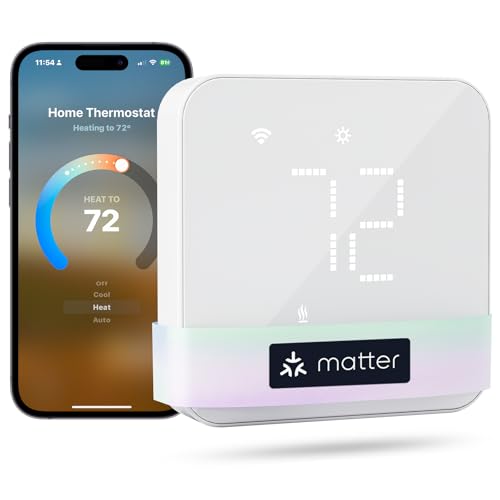
If you want a compact thermostat for a multi-zone setup without giving up smart home flexibility, the meross Smart Thermostat for Home (MTS300) is a strong choice. It offers Wi-Fi and Matter support, so you can connect it with Apple Home, Alexa, Google Home, SmartThings, or Home Assistant. It works with most 24V HVAC systems, including heat pumps, furnaces, boilers, and dehumidifiers, but not electric baseboard systems or two-wire setups. You can create 24/7 schedules, monitor usage, and receive filter and fault alerts. The glass panel has a clean look, and app or voice control makes each zone easy to manage.
- Connectivity:Wi‑Fi
- App Control:Yes
- Voice Control:Yes
- Scheduling:24/7
- Display:LED display
- C-wire:Required for some setups
- Additional Feature:Matter compatibility
- Additional Feature:Filter life alerts
- Additional Feature:HVAC usage monitoring
Honeywell TH6320ZW2003 T6 Pro Series Z-Wave Stat Thermostat & Smart Home
If you already use Z-Wave smart home gear and want precise temperature control for a multi-zone setup, the Honeywell TH6320ZW2003 T6 Pro is a strong fit. You can connect it to SmartThings or Vera, then adjust settings through the app or on its 2.3 inch touchscreen. It is programmable, battery powered, and learns your heating and cooling cycle to help fine tune comfort. You can also set minimum cooling and maximum heating limits. The wall mounted, Energy Star certified design keeps things simple, while button control and a backlight make daily use easy.
- Connectivity:Z‑Wave
- App Control:Yes
- Voice Control:No
- Scheduling:Programmable
- Display:Touchscreen
- C-wire:Not required
- Additional Feature:Z-Wave protocol
- Additional Feature:Cycle learning
- Additional Feature:Touch screen
Vine WiFi Smart Thermostat with Color Display
Vine’s WiFi Smart Thermostat with Color Display is a solid fit if you want a budget-friendly, feature-rich controller for a multi-zone home that still needs broad HVAC compatibility. It includes a 2.8-inch color touchscreen, app control through Vine or Smart Life, and voice support with Alexa or Google Home. It works with conventional, heat pump, dual-fuel, gas, electric, oil, and hot-water systems. You will need a C-wire, but you can use 7-day, 8-period schedules, geofencing, Auto Home/Away, alerts, and child lock. Energy Star certification adds efficiency.
- Connectivity:Wi‑Fi
- App Control:Yes
- Voice Control:Yes
- Scheduling:7-day
- Display:Color LCD touchscreen
- C-wire:Required
- Additional Feature:7-day programming
- Additional Feature:Auto Home/Away
- Additional Feature:Child lock
Mysa Smart Thermostat LITE for Baseboard Heaters
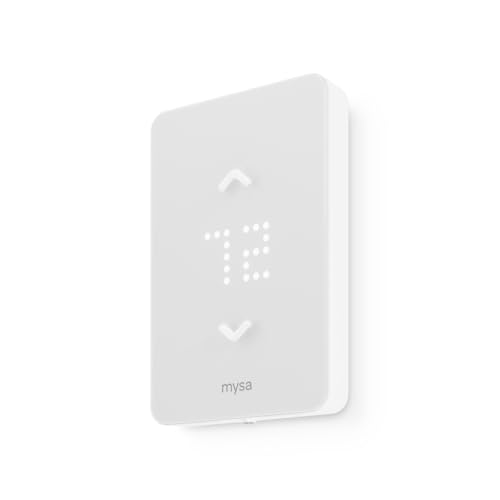
Mysa Smart Thermostat LITE is a strong fit if you need smart control for electric baseboard heaters in multiple rooms. It replaces 4 wire 120V to 240V line voltage thermostats and lets you manage each zone separately from the Mysa app. You can schedule each room for seven days, adjust temperatures remotely, and use Alexa, Siri, or Google Assistant without a hub. It works with single or double pole setups, but it will not suit low voltage HVAC systems. Installation usually takes about 15 minutes, and monthly runtime reports help you trim heating costs.
- Connectivity:Wi‑Fi/Bluetooth
- App Control:Yes
- Voice Control:Yes
- Scheduling:7-day
- Display:LCD display
- C-wire:Not compatible
- Additional Feature:Bluetooth connectivity
- Additional Feature:Room-by-room reports
- Additional Feature:Vacation mode
Nonprogrammable Digital Thermostat for Single-Stage Systems
If you are looking for a simple, reliable thermostat for a conventional single-stage system, the S3001 is a strong fit. It provides nonprogrammable room control for 1 heat/1 cool setups, along with a white backlit LCD and easy-to-use buttons. It works with gas, oil, or electric heat, boiler radiant heat, forced-air furnaces, gas fireplaces, and cooling-only systems. Installation takes about 30 minutes and uses 2 to 5 wires. It runs on 24 VAC or two AA batteries, usually without a C wire. You also get ±1°F accuracy, adjustable swing, 24-hour support, a 30-day return window, and a 2-year warranty.
- Connectivity:Wi‑Fi not listed, 24V wired
- App Control:No
- Voice Control:No
- Scheduling:Nonprogrammable
- Display:Backlit LCD
- C-wire:Generally not required
- Additional Feature:±1°F accuracy
- Additional Feature:Adjustable swing
- Additional Feature:30-minute install
Google Nest Learning Thermostat 3rd Gen Stainless Steel
The Google Nest Learning Thermostat 3rd Gen Stainless Steel is a strong choice if you want a smart thermostat that does more than follow a preset schedule, it learns your habits and can help manage comfort across multiple zones. You can adjust it remotely from your phone, laptop, or tablet, and it switches to Eco temperatures when you leave. The Nest Leaf indicates energy-saving settings, while Energy History helps you track usage. It also monitors HVAC problems, sends alerts, works with Alexa, and pairs with a Nest Temperature Sensor for room-by-room control.
- Connectivity:Wi‑Fi
- App Control:Yes
- Voice Control:Yes
- Scheduling:Learning-based
- Display:Digital display
- C-wire:Not specified
- Additional Feature:Learning algorithm
- Additional Feature:Home/Away Assist
- Additional Feature:HVAC monitoring
Factors to Consider When Choosing Smart Thermostats for Multiple Zones
When choosing a smart thermostat for multiple zones, make sure it matches your zoning setup and wiring requirements. You should also look for independent control for each area, along with smooth smart home integration and flexible scheduling features. These factors help keep every room comfortable while reducing energy waste.
Zone Compatibility
Zone compatibility matters because not every smart thermostat can handle every zone setup. You need to match the thermostat to your HVAC control type, whether that is a 24V low-voltage system or a line-voltage setup. Many models will not work with baseboard heaters or millivolt systems, so check that first. Then confirm it supports your zoning method, such as dampers and zoning panels, separate heat pumps, or independent HVAC units. Some thermostats only manage one forced-air system, which can cause problems in a multi-zone home. You should also make sure it works with your zoning controller, multi-stage equipment, and any remote sensors. Good coordination features help you balance temperatures, share averages, and prevent one zone from overriding the rest.
Wiring Requirements
Start by checking the wiring behind each zone, because a smart thermostat only works well if its power and control wires match your system. Confirm that each zone has a C-wire if the thermostat needs 24 VAC power, since many models and zone controllers rely on it for stable operation. Check the control terminals too, common low-voltage setups use R, W, Y, G, and C, but your zone board must match that layout. If you heat with electric baseboards, verify that you have proper high-voltage wiring and a line-voltage thermostat or relay-based control, because low-voltage devices will not switch 120 to 240 V circuits. Also check for zone panels, adapters, and multi-stage or heat-pump circuits that may need O/B, AUX/E, and reversing valve connections.
Independent Control
Once the wiring checks out, the next step is to verify that each zone can be controlled independently. You should have separate thermostats or controllers so you can adjust setpoints, schedules, and operating modes for each room, not all at once. Make sure each zone has its own sensor, or place a remote sensor 3 to 6 feet from where people actually sit or sleep, so readings match real conditions and the system does not short cycle. Also confirm that your HVAC setup supports true zoning with dampers, multiple stages, or individual heating elements. Finally, check the power requirements for every controller, including C-wire or adapter support, and look for per-zone scheduling, setpoint limits, and independent hold or vacation modes for different occupancy patterns.
Smart Home Integration
When you’re choosing smart thermostats for multiple zones, make sure they all speak the same smart home protocol, whether that’s Wi-Fi, Z-Wave, Zigbee, or Matter, so you can control every zone from one place and keep devices communicating reliably. Then confirm they work with your voice assistants and automation platforms, so you can trigger room specific commands, scenes, and routines without friction. Look for local control through Matter or LAN support; it helps your system keep working and respond quickly if the internet drops. Check that the thermostats connect cleanly with your hub or controller, since that lets you coordinate sensors, occupancy data, and energy saving logic across rooms. Finally, verify API or IFTTT support so you can build custom automations like demand response events and coordinated temperature holds.
Scheduling Features
Whenever you are comparing scheduling features for multi-zone smart thermostats, look for per-zone programming that gives each room its own 7-day, multiple-period schedule, so you can set different weekday, weekend, morning, day, and night temperatures without overlap. You should also want fixed time-based plans plus geofencing or occupancy triggers, so your thermostat adjusts automatically whenever people leave or come back. Bulk tools matter too, sync, copy, and offset features let you duplicate schedules across zones or stagger them without rebuilding everything. Make sure the system supports temporary holds, one-time overrides, and ramped setpoint changes, because those options keep manual tweaks from derailing your routine. Finally, choose a platform with remote app editing, cloud backups, and exportable schedules, so you can manage settings anywhere and restore them later.
Frequently Asked Questions
Can One Smart Thermostat Control Multiple HVAC Zones Independently?
Yes, but only if your system supports zoning. You will need compatible dampers or zone controllers, and sometimes multiple thermostats. One smart thermostat alone usually cannot independently manage separate HVAC zones.
Do All Multi-Zone Thermostats Work With Voice Assistants?
No, not every multi-zone thermostat works with voice assistants. You need to check compatibility first, because some support Alexa, Google Assistant, or Siri, while others only offer app control.
Is Professional Installation Required for Zoned Thermostat Systems?
Not always, but you will often want professional installation for zoned thermostat systems. You can replace a single thermostat yourself, but multi-zone setups need wiring, dampers, and configuration that professionals handle more safely and reliably.
Can Smart Thermostats Reduce Energy Use in Every Zone?
Can you save energy in every zone? Yes, you can, provided you set schedules, use occupancy sensors, and avoid overheating unused rooms. Smart thermostats reduce waste, but zoning efficiency still depends on insulation and system setup.
Will My Existing Wiring Support a Multi-Zone Smart Thermostat?
Perhaps, but you’ll need to check your HVAC control board, zone panels, and thermostat wires. You usually need a C-wire, separate zone dampers, and compatible terminals. If you’re unsure, test before buying.
