
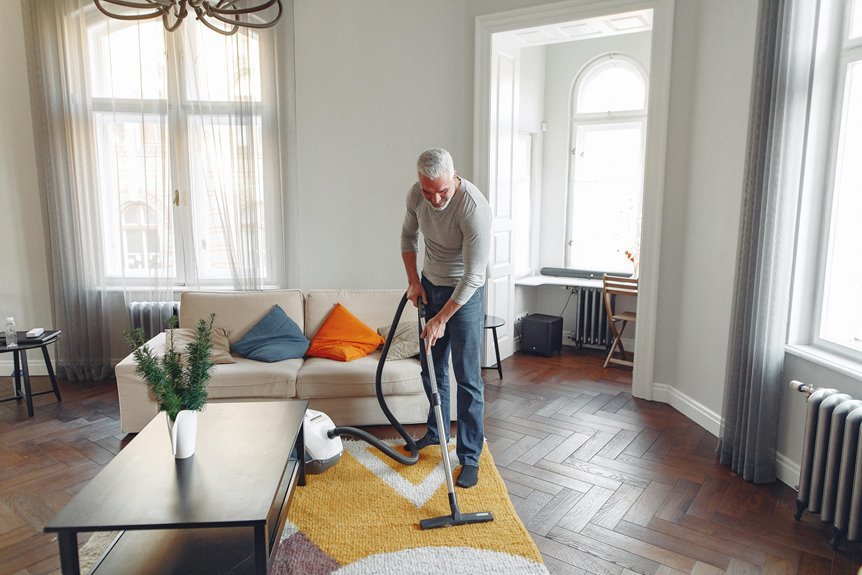

If sand has turned your carpet into a gritty mess, you can fix it without damaging the fibers. Start by clearing the area, keeping the carpet dry, and loosening packed sand with a soft brush or carpet rake. Then use a strong vacuum with a crevice tool, and work in slow, overlapping passes from different directions. Pay extra attention to stairs, edges, and areas under furniture, because that is where sand tends to collect.
Prep the Carpet to Lift Sand
Before you turn on the vacuum, clear the carpet so trapped sand has nowhere to hide. Remove loose items, floor mats, and anything portable so you can reach every sandy edge.
Then shake out small rugs outside, away from the doorway, so grit doesn’t get tracked back in.
Next, keep the carpet dry. Dry sand lifts faster, while damp grains cling stubbornly to the fibers. Use a soft brush, microfiber cloth, or carpet rake to loosen grit buried in the pile. Work gently, especially on plush carpet, so you lift the sand without damaging the texture.
After that, focus on the areas your household uses most, such as entryways, baseboards, and the space under furniture. Careful preparation makes the entire room feel cleaner, calmer, and ready for everyone.
Use a Vacuum That Can Handle Sand
After you prep the carpet, make sure your vacuum can handle sand without losing power.
You’ll get better results with strong suction, a sand-safe vacuum type such as a shop vac for heavy grit, and a hose or crevice tool for tight spots.
It’s also important to lower or adjust the brush roll so it lifts sand from the fibers instead of pushing it deeper.
Sand-Safe Vacuum Types
When your carpet is holding onto sand like a beach souvenir, the right vacuum can make the job much easier. You’ll feel more in control when you choose a machine built for grit, not just everyday dust. Start with upright or canister vacuums that have sealed filtration, since they help keep fine sand from blowing back into your space.
For heavier messes, wet dry models are a smart choice. They’re designed for rough debris, so they handle larger sand loads better than many standard home vacuums.
If your carpet has tight edges, stairs, or seams, choose a vacuum with a hose and crevice tool. That way, you can reach the places sand tends to hide. Together, these vacuum types help you clean with confidence and keep your home feeling welcoming.
Strong Suction Power
Strong suction power makes sand removal much easier. When your vacuum has real pulling power, it can lift gritty particles from deep in the carpet instead of pushing them around. That matters because you want your home to feel clean, calm, and welcoming again.
| What to check | Why it helps |
|---|---|
| motor strength | Handles heavier grains |
| airflow performance | Pulls sand from fibers |
| sealed suction path | Keeps pickup consistent |
| hose attachment | Reaches seams and edges |
A vacuum with steady suction also maintains performance as fine grit builds up. If you are dealing with beach day messes, that reliability helps you stay in control. You are not just cleaning carpet. You are restoring the shared comfort everyone notices. Choose a machine built for dense debris, and sand will not stand a chance today.
Brush Roll Control
Because sand is heavy and stubborn, brush roll control matters more than many people expect. When you can adjust the brush roll, you help your vacuum match the carpet instead of working against it. On low pile, a lower setting keeps the head close enough to lift gritty particles. On thicker carpet, raising the brush roll height helps prevent the vacuum from bogging down and scattering sand.
That balance helps you clean with more confidence, even if you’re still learning. If the brush sits too high, sand stays behind. If it digs in too hard, suction drops and carpet fibers can be stressed.
Start low, test a small area, and pay attention to the sound. A smooth, steady sound and consistent pull usually mean you have found the right setting for your carpet and your home.
Vacuum the Carpet in Slow Passes
Slow your vacuum down and let the suction do the hard work.
Use overlapping strokes, because sand often settles deep in the carpet and won’t come up if you rush.
If you move too quickly, you’ll skim the surface and leave gritty debris behind.
Use Overlapping Strokes
Start by slowing down and letting the vacuum do the heavy lifting, because sand does not lift well if you move too quickly. Guide the vacuum head in overlapping paths so each pass slightly covers the one before it. That extra overlap helps catch grains the first pass may have missed, especially in busy family areas.
| Move | Why it helps |
|---|---|
| Straight pass | Lifts surface grit evenly |
| Slight overlap | Catches missed sand between lines |
| Crosswise pass | Improves coverage from a different direction |
| Repeat section | Reaches sand settled deeper in the pile |
After completing one set of passes, turn and vacuum across the same area from a different angle. This cross pattern reaches the carpet fibers from both sides, which helps loosen stubborn grit. Keep your strokes steady and connected, and the carpet will feel cleaner and more thoroughly refreshed.
Let Suction Work
While it’s tempting to push the vacuum quickly and finish the job, slow passes give the suction time to pull up heavier sand that sits deep in the carpet. When you move too fast, the vacuum passes over grit instead of lifting it. Slow down and let the machine do its job well. You’ll get better particle removal, especially in dense fibers and high traffic areas.
Next, keep each pass steady and overlapping so airflow stays consistent across the carpet surface. Pause briefly on rough patches, entry points, and seams where sand tends to collect.
Then vacuum the same strip two or three times, changing direction if needed. This steady approach helps your space feel clean, welcoming, and ready for the people who use it every day, including you.
Loosen Sand Trapped Deep in Carpet
If sand will not come up with a normal pass of the vacuum, loosen it from the carpet pile first so the suction can reach it. Use gentle carpet agitation with short strokes, light tapping, or small circular motions. Keep the area dry, and focus on entryways, edges, and spots under furniture where grit tends to collect.
| Area | What you do |
|---|---|
| Entryways | Agitate fibers in crossing motions |
| Baseboards | Lift pile gently toward open floor |
| Under furniture | Tap and loosen packed grains |
| Thick sections | Use a carpet rake for deep pile refresh |
As you work, think of it as opening the carpet fibers so trapped sand can come free. Do not scrub hard. The goal is to loosen hidden sand so the next vacuum pass removes it more effectively, with less effort.
Use Brush Tools on Stubborn Carpet Sand
Bring in the right brush tool whenever vacuuming alone leaves that gritty crunch behind, because a few controlled strokes can lift sand the vacuum head can’t reach on its own. You aren’t doing anything wrong. Sand hides deep in carpet pile, so a little brush agitation helps complete the cleaning routine and makes the process feel more manageable.
- Choose a soft or rubber tipped brush that loosens grit without snagging fibers.
- Use short strokes or small circles for fiber safe scrubbing, keeping pressure firm but gentle.
- Brush a small section, then vacuum again right away so loosened grains don’t settle back down.
This approach works especially well in busy spots near doors. Stay patient, trust the process, and your carpet will feel more like home again fast.
Vacuum Sand From Stairs and Edges
After brushing loose grit from the carpet pile, vacuum the places where sand collects most, stairs, edges, corners, and the line along each baseboard. Use a hose or crevice tool, and move slowly so the suction can lift heavier grains instead of passing over them.
On stairs, start at the top so you stay in control and prevent loosened sand from falling onto cleaned steps. Guide the tool into each tread corner for thorough crevice cleanup, then trace the point where the riser meets the step.
Next, move to the room perimeter. Run the attachment along wall edges, under slight lip areas, and into tucked carpet lines for careful seam detailing. If sand remains near furniture feet or trim, angle the nozzle and overlap your passes. This helps create a cleaner, more welcoming space.
Re-Vacuum Until the Carpet Feels Grit-Free
Once you’ve cleared the stairs and edges, vacuum the main carpet again, slowly, and give each section a few extra passes until it no longer feels scratchy under your hand or feet.
This extra time matters because fine sand can stay deep in the pile even when the surface looks clean. To make these repeat vacuum cycles effective, work patiently and use overlapping strokes from more than one direction.
- Move forward and back, then vacuum crosswise so suction can reach grains from different angles.
- After each area, check for remaining grit with your palm or a socked foot.
- If you still feel crunching, brush the area lightly and vacuum again.
You aren’t overdoing it. You’re using the method that works. Once the carpet feels smooth and quiet, you’ll know your shared space is ready to enjoy again.
Prevent Sand From Getting Back Into Carpet
A clean carpet stays that way much longer once you stop sand at the door and before it lands on the floor. After you vacuum out every last grain, protect that fresh feel with entryway mats, quick outdoor shake-offs, and easy shoe removal. You create a home everyone can settle into comfortably, without that hidden crunch underfoot.
| Habit | Why it helps | Make it stick |
|---|---|---|
| Outdoor mat | Scrapes grit off shoes | Place one near every door |
| Indoor mat | Catches fine sand | Wash it often |
| Shoe removal | Stops tracked-in sand | Keep a basket nearby |
| Shake beach items | Drops sand outside | Do it before entering |
| Quick post-trip vacuum | Stops buildup early | Vacuum entry zones promptly |
That routine feels simple, welcoming, and practical for busy families.
Frequently Asked Questions
Can Sand Damage My Vacuum Cleaner Over Time?
Yes, sand can damage your vacuum over time. It can cause filter wear, motor strain, clogged hoses, and scratched internal parts. To protect your vacuum, empty it often, use the proper attachments, and vacuum dry sand slowly.
Is Professional Carpet Cleaning Better for Beach Sand?
Professional cleaning generally delivers better results for deep beach sand, especially in thick carpet. It outperforms DIY sand removal methods, but carpet cleaning costs may not seem worthwhile for light buildup.
How Often Should Carpets Be Vacuumed After Beach Trips?
Vacuum immediately after each beach trip, then vacuum again within a day or two. This schedule helps keep your home fresh and welcoming, and your beach cleanup routine prevents sand from settling deeper into the carpet.
What Type of Carpet Traps the Most Sand?
Like a magnet, thick, dense carpets trap the most sand. When carpet fiber density is high and the construction is loop pile, grains settle deeper into the surface, so more thorough cleaning is needed to keep shared spaces welcoming.
When Should I Replace Carpet Instead of Cleaning It?
Replace your carpet when cleaning can no longer restore it, especially if it has reached the end of its lifespan, odors persist, the padding has deteriorated, or visible wear is apparent. Replacing it can create a cleaner, more welcoming space and help everyone at home feel more comfortable.
