
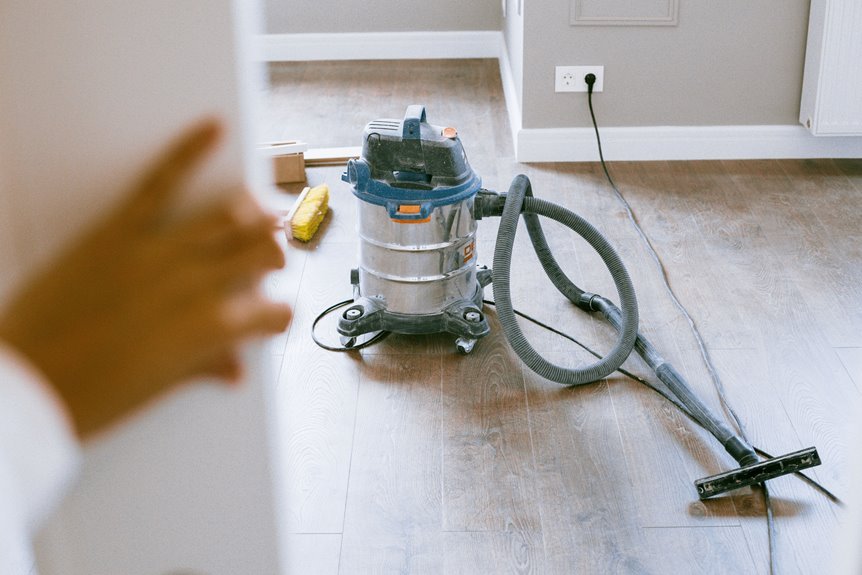

Baseboards look small, but they collect a surprising amount of dust. When you use the right vacuum attachment and a steady hand, you can clear that buildup quickly without scuffing paint or pushing dirt into corners. First, prep the area, choose a crevice or brush tool, and work along the top edge, bottom seam, and tight spots where dust tends to hide, because a few small moves make a big difference.
Choose the Right Vacuum Attachment
The right vacuum attachment makes this job much easier, and it helps you clean the baseboards without nicking the paint or pushing dust into the air.
For smart vacuum attachment selection, skip the wide floor head. It’s bulky, and it can miss the top ledge and lower seam. Instead, choose a slim crevice tool for narrow edges, corners, and tight gaps.
If your baseboards collect pet hair or soft dust, switch to a brush attachment. It loosens debris while staying gentle on trim. As you compare nozzle shapes, look for one that glides along the full length without scraping. This gives you better contact and steadier control.
If your baseboards have grooves or detailed trim, a narrow or soft bristled tool helps you reach those spots cleanly and confidently every time.
Prepare Baseboards Before You Vacuum
Before you start vacuuming, create a clear path so you can reach every inch of the baseboard without working around furniture, rugs, or cords. Pull lightweight pieces away from the wall, move loose cords aside, and lift any floor coverings that block access.
This clears the surrounding space and makes the job feel easier right away.
Next, inspect the baseboard surface closely. Look for sticky spots, chipped paint, cobwebs, and clumps of pet hair in corners or along the top ledge. If you notice anything loose, pick it up by hand so it doesn’t smear or get dragged later.
Also check for nails, splinters, or rough trim that could catch a vacuum attachment. This quick prep helps you stay organized and ready to clean efficiently.
Vacuum Baseboards Step by Step
Start by attaching a crevice tool or slim brush attachment. Move the vacuum slowly along the full length of the baseboard so it lifts dust instead of pushing it around. Keep the nozzle close, but let it glide gently to protect paint and trim.
Next, use a steady vacuuming sequence. Work section by section, cleaning one wall at a time so you don’t miss the top ledge or bottom seam.
If you need extra help with fine dust, stretch an unused dryer sheet over the attachment and secure it with a rubber band. Continue moving slowly, especially where pet hair or loose debris collects.
As you work, each section will look cleaner and brighter. This simple step helps you create a cleaner, more cared for home, one pass at a time.
Clean Baseboard Corners and Edges
Target the corners and edges next, because that’s where dust tends to collect and cling. After you finish the long runs, switch to a crevice tool or slim nozzle so you can reach tight corners without bumping the trim. Move slowly, and trace the top ledge, the bottom seam, and any narrow edge crevices where fine dust settles.
If the vacuum misses smaller details, continue with a small soft brush, an old toothbrush, or cotton swabs. These tools help lift debris from trim joints and recessed areas while keeping the space neat and well maintained.
You aren’t aiming for perfection. You’re giving your home the steady attention that helps every room feel clean and welcoming.
As you work, keep furniture pulled back so you can clean each corner fully and with confidence.
Remove Pet Hair From Baseboards
Once you’ve cleaned the corners and edges, pet hair is often the next thing you’ll notice clinging to the baseboards, especially near rugs, vents, and the spots where your pets like to nap.
To remove it quickly, switch to your vacuum’s brush attachment. It lifts loose strands without scraping paint and works well along the top ledge and bottom seam where shedding collects. If the hair keeps sticking, wrap an unused dryer sheet over the brush and secure it. This simple step helps trap fine fuzz as you vacuum.
As you move from room to room, work slowly and keep rugs pulled back so you can reach every section. This step helps your home feel fresh, cared for, and welcoming. It also supports allergy reduction and makes shared spaces more comfortable for everyone.
Tackle Heavy Dust on Baseboards
If a thick layer of dust has settled on your baseboards, you can remove it without turning it into a grimy mess. Start by pulling rugs or small furniture away so you can reach each section easily. Then vacuum slowly along the top ledge, bottom edge, and corners, where heavy dust buildup often collects. A brush attachment works well for loose debris, while a slim nozzle helps you reach grooves and trim details.
If the dust feels especially clingy, place an unused dryer sheet over the nozzle and secure it with a rubber band. As you work, it can help trap fine particles from neglected baseboard grime instead of spreading them around. Clean in short sections, check the sheet often, and continue until the dust is gone. Your space will look cleaner and feel more cared for.
Vacuum Baseboards Without Scuffing Paint
After you’ve lifted the heavy dust, the next step is protecting the finish while you vacuum the trim clean. For paint-safe vacuuming, switch to a brush attachment or slim nozzle that glides, not scrapes. Go slowly and keep the tool just off the surface for gentle trim protection.
| Do this | Why it helps |
|---|---|
| Use a soft brush | Loosens dust without marking paint |
| Choose a slim nozzle | Reaches seams cleanly |
| Move in long passes | Keeps dust from puffing around |
| Check the attachment edge | Prevents hidden scuffs |
For extra care, wrap an unused dryer sheet over the nozzle and secure it. Then follow the top ledge, bottom edge, and corners with light pressure and a steady hand.
Clean Textured or Ornate Baseboards
Because dust collects in carved trim, grooves, and small corners, textured or ornate baseboards need a more careful vacuum pass than flat ones. You’ll get better results when you switch to a crevice tool or soft brush and move slowly along the full length.
As you work, follow the shape of the trim instead of sweeping past it. Let the suction reach into textured grooves, the top ledge, and the lower seam where debris settles.
If fine dust keeps escaping, secure an unused dryer sheet over the nozzle with a hair tie, then vacuum again. This simple step helps trap extra particles and makes the job easier. In tight corners and trim joints, angle the attachment gently so you lift dust without missing the details.
Vacuum Baseboards on Carpet
To vacuum baseboards on carpet, attach the brush tool first so you can lift dust and pet hair without scraping the trim. Gently pull back the carpet edge with your fingers to expose the bottom seam where dirt collects.
Move the vacuum slowly along the trim, keeping the brush on the top ledge, corners, and lower edge for a thorough clean.
Attach Brush Tool
Start with the brush attachment, as it’s the safest and easiest option for baseboards that run along carpet. It allows you to clean confidently while keeping the area neat and well maintained. A proper brush attachment setup helps the tool glide along the trim without scraping paint or catching carpet fibers. Choose a slim brush head if one is available.
Next, use soft bristles to loosen dust, pet hair, and dry debris from the top ledge, bottom edge, and corners. Move slowly so the vacuum lifts particles instead of pushing them around. If you need extra help, place an unused dryer sheet over the brush and secure it with a hair tie. This simple step can catch fine dust and leave the space feeling fresh and clean.
Lift Carpet Edge
If your baseboards sit right against carpet, gently pull the carpet edge back with your fingers so you can reach the lower seam without grinding dust deeper into the fibers. That small step helps you clean carefully and keeps the room feeling fresh.
As you lift the carpet edge, hold the pile back only enough to expose the line where dust collects. You don’t need force. A light touch protects the carpet and helps you stay in control.
If the carpet feels snug, ease it back slowly for better access to the underlay near the wall. This gives you a clearer path to the seam and helps prevent missed buildup at floor level.
In homes like yours, these small prep steps matter. They make the job easier, neater, and more worthwhile.
Vacuum Along Trim
Next, switch to a crevice tool or slim nozzle and move the vacuum slowly along the trim, keeping the attachment close to the top ledge, the bottom seam, and each corner where dust likes to hide. This steady pass gives you better trim edge coverage on carpet, especially when fibers trap grit near the wall. If your vacuum has suction control, lower it slightly so the tool glides without grabbing the carpet.
| Area | What you do |
|---|---|
| Top ledge | Trace lightly |
| Bottom seam | Angle inward |
| Corners | Pause, then pull |
| Grooves | Use brush pass |
As you work, keep the full length of the nozzle against the baseboard without scraping the paint. You are not just cleaning. You are caring for the details that make your home feel shared, settled, and welcoming to everyone.
Vacuum Baseboards on Hard Floors
A vacuum works especially well on hard floors because dust along baseboards stays loose and easy to lift before it turns into sticky grime. That makes floor-safe vacuuming simple and effective when you use the right attachment and move carefully.
On wood, tile, vinyl, or laminate, you’ll get better hard-surface dust pickup by using a crevice tool or slim nozzle instead of a wide floor head.
- Pull rugs and small furniture away first
- Vacuum the top ledge and bottom seam
- Move slowly so dust doesn’t scatter
- Use a brush tool for pet hair and grooves
- Check corners where debris hides most
If you want an easy team trick, wrap an unused dryer sheet over the nozzle with a hair tie. It can help catch fine dust and keep your space feeling cared for.
Wipe Baseboards for a Clean Finish
Once you’ve vacuumed away the loose dust, wipe the baseboards with a damp microfiber cloth and warm water mixed with a few drops of dish soap. This microfiber wipe after vacuuming removes the film that suction can miss and helps the room feel thoroughly cared for. Keep the cloth damp, not wet, to protect paint and wood.
As you work, clean small sections and follow with a dry cloth. This simple routine prevents moisture from sitting too long and leaves a smooth, fresh finish. For corners, grooves, and trim details, wrap the cloth over your finger or use a soft toothbrush. You’re not just cleaning, you’re adding the finishing touches that make each space feel welcoming, polished, and comfortable.
Avoid Common Baseboard Vacuum Mistakes
Even after a careful wipe-down, a few vacuuming mistakes can leave baseboards looking dusty, scuffed, or streaky. To keep your trim looking well cared for, use the right attachment and work slowly. A wide floor head can bump painted surfaces, while a crevice tool or soft brush can reach edges more effectively. These vacuum safety tips can help prevent damage and leave your home looking cleaner.
- Choose a slim nozzle instead of a bulky floor head.
- Glide the tool gently rather than pressing hard.
- Vacuum dry dust before using a damp cloth.
- Check corners, grooves, and the bottom seam closely.
- Keep rugs and furniture pulled back for safer access.
If you try the dryer sheet hack, secure it properly and replace it as soon as it gets dirty or tears.
Keep Baseboards Dust-Free Longer
Regularly vacuuming your baseboards keeps dust from turning into the sticky, gray buildup that takes far more time to remove later. When you make it part of your weekly routine, your home feels cared for, welcoming, and easier for everyone to enjoy.
To make the results last longer, build simple dust prevention habits into your cleaning routine. Use a slim nozzle or brush attachment, move slowly, and clean the top ledge, bottom seam, and corners. If you have pets, rugs, or high traffic rooms, vacuum your baseboards more often.
Afterward, run an unused dryer sheet over the baseboards to pick up fine particles and help reduce future cling. Keep furniture slightly pulled out whenever possible so you don’t miss hidden areas. These small steps help baseboards stay cleaner longer and keep your space feeling fresh, calm, and comfortable for everyone.
Frequently Asked Questions
How Often Should Baseboards Be Vacuumed in Pet-Friendly Homes?
For pet-friendly homes, vacuum baseboards weekly to control pet dander. If your pets shed heavily, vacuum them twice a week. This simple, consistent routine helps keep your space fresh, fur-free, and welcoming for everyone.
Can Vacuuming Baseboards Help Improve Indoor Air Quality?
Yes, vacuuming baseboards can help improve indoor air quality by enhancing dust control and supporting allergen reduction. It removes settled dust before it recirculates, helping your home feel fresher, healthier, and more comfortable for everyone.
Are Dryer Sheets Safe for All Painted and Wood Baseboards?
No, you should not assume dryer sheets are safe for all baseboards. First, test an inconspicuous area to check painted finish care and wood surface protection. This helps protect your home’s details and keeps your cleaning routine on track.
What Should I Do if Baseboards Still Look Dirty After Vacuuming?
If your baseboards still look dirty after vacuuming, spot clean them with a damp microfiber cloth and mild soap. For stubborn residue, use a toothbrush or a melamine sponge, then dry each section so your space feels cared for.
When Is It Better to Wash Baseboards Instead of Only Vacuuming?
Wash baseboards whenever you notice sticky spots, stains, or a lingering film after vacuuming. If your home sees a lot of activity, especially with pets or children, periodic deep cleaning helps remove stubborn grime and keeps the space looking well maintained.
