
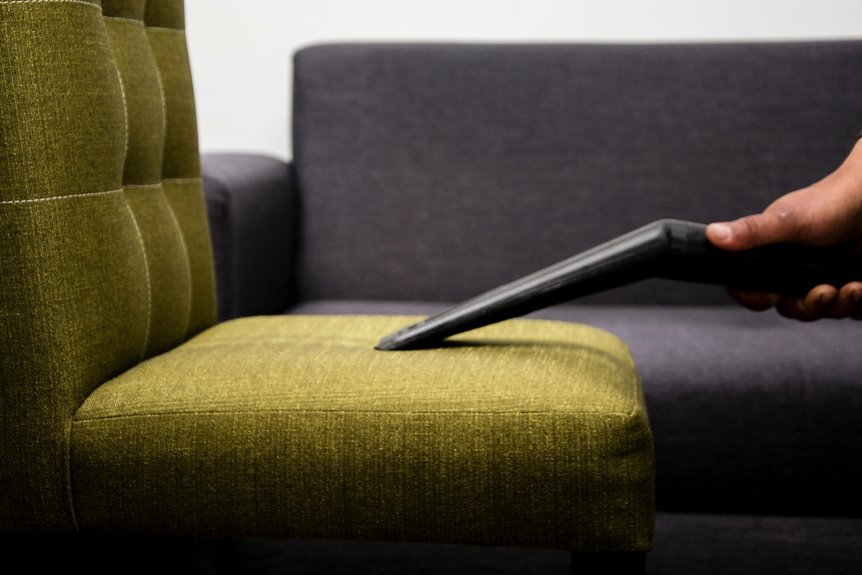

To clean upholstery with a vacuum cleaner, start with the care tag, because the wrong tool can damage fabric quickly. Next, remove pillows and loose crumbs, then choose the right attachment for each area: use the upholstery tool for broad surfaces, the crevice tool for seams, and a soft brush for delicate sections. Work slowly from top to bottom, remove pet hair first, and blot stains instead of rubbing them. These simple steps can help your furniture look fresh again.
Check the Upholstery Care Tag
Before you start vacuuming, check the upholstery care tag so you don’t accidentally damage the fabric. That small tag helps you protect a piece you value and keeps your home looking inviting. Look for care label codes and read the fabric cleaning instructions carefully. They tell you whether the material can handle standard vacuuming, requires gentler suction, or needs extra caution around delicate fibers.
As you read, pay attention to warnings about texture, pile, and surface finishes. Some fabrics, such as velvet or silk blends, require a softer approach so you don’t crush the nap or pull threads. If the tag is faded, check the manufacturer’s guide or brand website for matching details.
Once you understand the label, you can clean with confidence and care for your furniture properly.
Prep Upholstery Before You Vacuum
Once you know the care tag won’t lead you astray, start by clearing the furniture so you can reach every surface easily. First, remove loose items such as pillows, throws, toys, and magazines. Take off the cushions as well, so you can expose crumbs, lint, and dust underneath. Next, clear the surrounding area by moving side tables, baskets, or floor lamps that block your access.
Then check your vacuum. Empty the dustbin, inspect the filter, and confirm that airflow is strong. If pet hair or fuzz covers the fabric, use a lint roller first so the vacuum doesn’t have to work as hard.
This simple preparation helps you stay organized, feel confident, and care for your shared space with intention.
Choose the Best Upholstery Attachment
Now you’ll want to pick the attachment that fits your fabric, because the right tool cleans better and helps protect the surface.
Use the upholstery attachment for most fabric areas, but switch to a soft brush for delicate materials and leather.
As you compare attachment shapes, consider where you’re cleaning, because wide heads cover open panels quickly, while narrower tools reach tight curves and edges more easily.
Match Fabric Type
Because every upholstery fabric reacts a little differently, choosing the right vacuum attachment helps you clean effectively without wearing the material down. You protect your furniture best when you respect fabric sensitivity and match it with the proper suction setting. This simple step helps your home feel cared for, comfortable, and welcoming.
- Use the upholstery attachment on most woven fabrics to lift dust gently and evenly.
- Switch to a soft brush for delicate materials or leather, where rough contact can leave marks.
- Lower suction on velvet, chenille, or loose weaves so fibers don’t flatten or pull.
- Test your setting on a concealed spot first if you’re unsure about the fabric type.
As you move from general cleaning to fabric matching, think of it as learning what your furniture needs. That small extra level of care helps each piece remain part of your lived-in space.
Compare Attachment Shapes
Which attachment shape works best on your sofa? Start with an attachment shape comparison that matches how your furniture is built. A wide, flat upholstery tool covers open fabric quickly, so the job feels more manageable. A narrow crevice tool reaches seams, cushion edges, and tight gaps where crumbs collect. A round dust brush works well on delicate fabric or leather because its softer edge glides without scratching.
As you compare nozzle profiles, consider surface size, fabric sensitivity, and the areas your family uses most. Low, slim heads slide under cushion lips. Wider mouths clean broad seats evenly. Bristled edges loosen pet hair more effectively on textured weaves.
When you choose the right shape, your vacuum becomes easier to use, and your sofa gets the careful, thorough cleaning it needs.
Vacuum Upholstery Top to Bottom
To keep dirt from falling onto areas you have already cleaned, vacuum the upholstery from top to bottom. Start at the back, then move down to the arms, cushions, and base.
This order helps you stay organized and makes each pass more effective. You avoid pushing loose dust around, and the fabric gets more even care.
As you work, divide the piece into small zones for better coverage. This approach helps you clean with confidence and makes it easier to see that no section is missed, including those easy to overlook spots.
- Start at the back before cleaning lower surfaces
- Use slow, overlapping strokes in each section
- Vacuum front to back, then side to side
- Keep your path steady across the entire piece
This simple pattern helps your furniture feel fresh, cared for, and ready to use again.
Clean Seams, Corners, and Crevices
Once you’ve covered the open fabric areas, shift your focus to the seams, corners, and tight crevices where crumbs, dust, and pet hair like to hide. Switch to the crevice tool, then guide it slowly at a shallow angle along stitched lines, seat edges, and arm corners. That careful approach makes tight seam cleaning safer and more effective.
Next, remove the cushions so you can reach under them, around the base, and into folds where concealed gap debris settles. Use short, controlled passes instead of quick sweeps, because slower movement lifts trapped dirt without tugging threads.
Whenever fabric feels delicate, lower the suction first and test a small spot. As you work section by section, you’ll give your furniture the same thoughtful care every welcoming home deserves, and your whole space will feel fresher too.
Lift Pet Hair and Treat Leftover Stains
If pet hair still clings to the fabric after you have cleaned the seams and crevices, start with a lint roller to pick up the loose fur on the surface before vacuuming again. Then use your upholstery tool with slow, overlapping passes for more effective pet hair removal, especially in areas where fur is woven into textured fabric.
As you move from pet hair to spots, treat stains gently so your furniture continues to feel clean, comfortable, and well cared for.
- Vacuum first so loose dirt doesn’t spread further into the fabric
- Blot fresh marks with a clean cloth, avoid scrubbing
- Apply stain pretreatment only to the affected area
- Test any cleaner on a concealed spot before full use
If a mark remains, use a fabric-safe solution and blot again.
The goal isn’t perfection. It’s a clean, comfortable space everyone can enjoy.
Keep Upholstery Cleaner Longer
Clean upholstery stays fresh longer when you follow a simple routine after vacuuming, because dust, lint, and pet hair are less likely to settle deep into the fabric again. Put cushions back only after checking seams, edges, and hidden areas, then fluff everything so your furniture feels welcoming and well cared for.
Next, build routine maintenance habits that fit your week. Vacuum high-use seats regularly, follow a top-down path, and use the right attachment for each fabric.
If odors start to develop, use gentle odor control methods. Sprinkle baking soda, let it sit, and vacuum slowly. Keep throws clean, rotate cushions, and treat spills quickly so dirt doesn’t become embedded in the fabric.
With consistent care, your space stays ready for movie nights, guests, naps, and everyday life.
Frequently Asked Questions
How Often Should Upholstery Be Professionally Deep-Cleaned?
Schedule professional deep cleaning every 12 to 18 months as part of regular upholstery maintenance. If your home has kids, pets, or heavy daily use, plan for service sooner, since these factors can affect fabric lifespan.
Can Vacuuming Help Reduce Dust Mite Allergens?
Yes, regular vacuuming helps with dust mite control and allergen reduction by removing mites, shed skin, and dust from upholstery. It can help improve air quality and keep your shared space feeling clean and welcoming.
Is Steam Cleaning Better Than Vacuuming for Upholstery?
Steam cleaning is not always better; the right choice depends on the fabric and the level of soiling. Vacuuming removes surface debris, while steam cleaning helps sanitize and lift deeper grime. Used together, they help keep upholstery fresher, cleaner, and more inviting.
When Should Upholstery Be Replaced Instead of Cleaned?
Replace upholstery when you notice visible wear, persistent odors, or structural damage. If your family sofa sags, tears expose stuffing, and cleaning no longer improves its condition, replacing it can provide fresh, supportive furniture that helps keep your space comfortable and welcoming.
How Long Should Upholstery Dry After Spot Cleaning?
You should let upholstery dry for 2 to 6 hours, though drying time depends on airflow, fabric care, and how much moisture was used. For the best results, wait until the next day before sitting on it, so your furniture stays fresh and inviting.
