
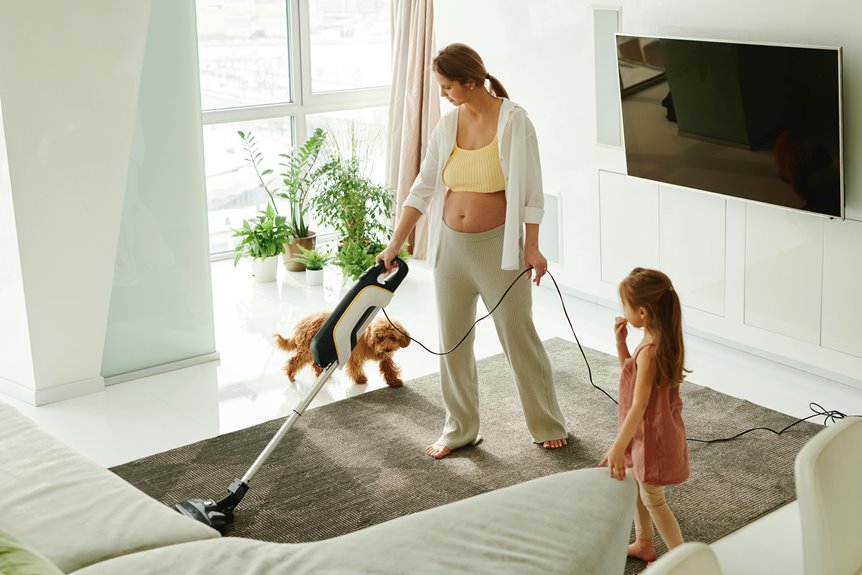

Vacuuming the right way can make a real difference in reducing allergies at home. A sealed vacuum with a HEPA filter helps remove dust, pet dander, pollen, and dust mite waste before they continue to irritate your nose and eyes. However, the wrong machine or quick passes can stir these particles back into the air, which can make symptoms worse.
Can Vacuuming Help With Allergies?
Yes, vacuuming can help with allergies, especially when you do it regularly and use the right machine. A consistent vacuuming routine removes allergen buildup before it settles deeper into your home and daily life. That can help your space feel cleaner, calmer, and more comfortable for everyone in the household.
Your vacuum also needs sealed filtration so particles stay trapped instead of circulating back into the room. You’ll get better results if you vacuum slowly, make repeated passes, and clean more than just carpets. Rugs, sofas, drapes, mattresses, and corners all collect allergens.
If you have pets, children, or high traffic areas, you may need to vacuum more often. Vacuuming works best as one part of a broader weekly allergy control routine.
How Vacuuming Affects Dust, Dander, and Pollen
When you vacuum thoroughly, you remove dust and other small allergens from carpets, rugs, and furniture before they accumulate.
Vacuuming also reduces pet dander and tracked-in pollen, which can settle into fabric and flooring more quickly than many people expect. However, your technique matters, because the goal is to capture those particles rather than recirculate them into the air.
Dust And Allergen Removal
Although dust often looks harmless, it can carry pet dander, pollen, and tiny dust mite waste that keeps allergy symptoms going, so vacuuming helps by pulling those particles out of carpets, rugs, furniture, and other soft surfaces where they tend to settle. When you vacuum thoroughly, you improve dust capture and support real allergen reduction in the rooms you use every day.
That matters because allergens build up quietly, even when your home looks clean. As you move the vacuum slowly and make extra passes, you lift more fine debris from fibers instead of leaving it behind. A well sealed vacuum also keeps what you collect from escaping back into the air.
With consistent cleaning, you create a space that feels fresher, calmer, and more comfortable for everyone in your home each day.
Dander And Pollen Control
Because pet dander and pollen are so light, they don’t just stay where you can see them. They cling to carpet, settle on sofas, and move through rooms with every step you take.
When you vacuum often, you remove those particles from fibers before they build up and continue to irritate your nose, eyes, and lungs.
This becomes even more important during heavy pollen periods or if you share your home with pets.
Effective dander control starts with a vacuum that captures tiny particles instead of blowing them back into your space. A sealed machine with strong filtration helps you clean without sending allergens into the air your family breathes. Move slowly, make extra passes, and vacuum rugs, furniture, and curtains as well.
That consistent routine helps your home feel fresher, calmer, and more comfortable for everyone.
Why Vacuuming Sometimes Makes Allergies Worse
Even when you clean often, vacuuming can make your allergies flare up if it pushes dust back into the air.
You might breathe in more particles when your vacuum has weak filtration or leaks fine debris instead of trapping it.
If you vacuum too fast or use poor technique, you can stir up allergens rather than remove them.
Dust Re-Release Risks
While vacuuming can lower allergens over time, it can also make you feel worse in the moment when it stirs dust, pollen, and pet dander into the air instead of trapping them. As you push the vacuum, brush rolls and strong airflow can kick up dust clouds that linger around you and settle on nearby surfaces.
That means you might breathe in more airborne particles during cleaning, especially from carpets, rugs, and upholstery where allergens hide deep in the fibers. If you’re sensitive, your nose, eyes, and throat can react quickly, which can feel frustrating when you’re trying to care for your space. You aren’t doing anything wrong. This short burst of exposure is a common reason vacuuming sometimes feels like it backfires, even in homes where everyone works hard to keep the air cleaner.
Poor Filter Performance
Why can vacuuming leave you sneezing more, even after a good cleaning session? Sometimes the problem isn’t your effort. It’s your vacuum’s filter. When that filter can’t trap tiny particles effectively, dust, pollen, and pet dander slip back into your indoor air. This kind of filter leakage can make your space feel less comfortable, even when you’re doing your best to care for it.
There is also the issue of suction loss. When filters clog or fit poorly, airflow drops and pickup becomes weaker. Your vacuum may sound like it’s working hard, but it can leave allergens behind while also sending some back into the room.
That’s why sealed systems and true HEPA filters matter so much. They help keep what you collect inside the vacuum, where it belongs, so your home feels cleaner, calmer, and more welcoming for everyone, especially those with sensitive noses.
Improper Vacuum Technique
If your vacuuming style is too quick or too rough, it can stir allergens into the air instead of removing them from your home. When you rush, the brush roll can fling dust, pollen, and dander upward, where you and your family may breathe them in.
A better approach can make your home feel more comfortable. Move slowly, overlap your passes, and vacuum in two directions so carpet fibers release more trapped debris. Also, avoid pushing down with extra pressure. That force can cause carpet matting, which traps dirt deeper and makes it harder to remove.
Keep the vacuum head level, let the machine do the work, and give high traffic areas extra passes. Don’t forget upholstery, corners, drapes, and mattresses. With a gentler technique, you can create a cleaner space that feels safer, calmer, and more welcoming for everyone.
Which Vacuum Filters Are Best for Allergies?
How do you choose a vacuum filter that actually helps your allergies instead of stirring everything up? Start with HEPA certification, because it shows the filter can capture over 99% of tiny particles. Pair that with sealed filtration, so dust stays inside the vacuum instead of blowing back into your shared space.
| Filter feature | Why it helps |
|---|---|
| HEPA certification | Captures very small allergens |
| Sealed filtration | Prevents particle leaks |
| Micro-lined bags | Reduces dusty blowback |
| Standard filters | Often miss fine irritants |
That combination can help you feel more comfortable at home, especially when allergies make daily life more difficult. If you want cleaner indoor air and less sneezing, choose filters designed to trap particles fully, not just move them around. You deserve that comfort every day.
What Makes a Good Allergy Vacuum?
Peace of mind starts with a vacuum that captures allergens instead of sending them back into your room. You want a model that helps everyone in your home breathe easier and feel more comfortable. That begins with a sealed HEPA system, which keeps tiny particles trapped instead of letting them leak back into the air.
Your vacuum should also deliver strong suction, have a well sealed body, and include tools that reach fabric, edges, and stairs without stirring up dust. If you prefer a bagged model, choose allergy safe vacuum bags because they hold debris securely during disposal. A good allergy vacuum should also be easy to maneuver, simple to maintain, and durable enough for regular use. When your vacuum works with you, cleaning feels less stressful and more manageable every day.
Where Vacuuming Matters Most at Home
You’ll get the biggest allergy relief when you vacuum the places where allergens build up fastest, especially bedroom floors and rugs, upholstered furniture, and high-traffic living spaces.
These areas collect dust, pet dander, and pollen day after day, even when your home looks clean. When you focus on these spots first, you can reduce everyday allergen exposure where you and your family spend the most time.
Bedroom Floors And Rugs
Because bedrooms are where you spend long hours breathing close to the floor, vacuuming bedroom rugs and floors can make a real difference in lowering dust, pet dander, pollen, and dust mites where they tend to build up.
That’s why smart bedroom floor care helps you create a space that feels safer, calmer, and more like home. Vacuum at least twice a week, and move more slowly than usual so the machine can lift particles from fibers and cracks.
For rug allergen buildup, make repeated passes and change direction to loosen what gets trapped deep down. If you have pets, vacuum more often. Use a sealed vacuum with HEPA filtration, because you deserve cleaner air, not dust blown back into your room.
Then your bedroom can support better rest and fewer allergy flare-ups overall.
Upholstered Furniture Areas
Soft surfaces don’t stop at the floor, which is why upholstered furniture deserves the same attention as bedroom rugs. Your couch, chairs, and ottomans can collect dust, pet dander, pollen, and mites in the places where your family gathers most.
To make vacuuming effective, use a HEPA-filter vacuum with an upholstery tool and move slowly across seats, arms, backs, and seams. This careful approach supports fabric upholstery care and helps lift particles instead of stirring them into the air.
Next, remove cushions and vacuum both sides, along with the frame underneath, because cushion allergen removal is important in the hidden areas where crumbs, hair, and dust collect. If you’re sensitive, wear a mask or ask someone else to handle the job. When you keep these shared spaces cleaner each week, your home feels fresher, calmer, and more welcoming for everyone.
High-Traffic Living Spaces
In the rooms your family uses most, allergens build up faster than many people realize. Your living room, family room, and busy walkways collect dust, pet dander, and pollen every day, especially near entryway mats and along hallways with heavy foot traffic. When you vacuum these spaces often, you help everyone breathe easier and feel more comfortable together.
- Vacuum high-use floors at least twice a week.
- Move slowly so carpet fibers release trapped particles.
- Make extra passes where kids play or pets rest.
- Use a HEPA vacuum so dust stays trapped.
- Clean edges, rugs, and fabric ottomans, not just open floors.
Because these areas connect the whole home, allergens spread from them quickly. Regular care keeps shared spaces fresher, calmer, and more welcoming for the people you love most each day.
How Often Should You Vacuum for Allergies?
Generally, you should vacuum at least once or twice a week, even if allergies are not a problem in your home. You may need to vacuum more often in bedrooms, high traffic rooms, and any space where pets spend time.
A consistent vacuuming schedule helps your home feel fresher and more comfortable. During seasonal cleaning, pollen, dust, and dander can build up more quickly, so it helps to add extra sessions.
| Area | Best Frequency | Why It Helps |
|---|---|---|
| Bedrooms | 2 to 3 times weekly | Reduces dust mites |
| Living room | 2 times weekly | Manages daily traffic |
| Pet zones | 3 times weekly | Helps limit dander buildup |
| Hallways | 2 times weekly | Collects tracked in debris |
| Whole home | Weekly minimum | Supports cleaner air |
If you have pets or heavy foot traffic, more frequent vacuuming can help reduce allergens and make the home more comfortable.
How to Vacuum Carpets Without Spreading Allergens
Even if you vacuum regularly, technique matters as much as frequency. To keep your carpet from releasing dust back into the air, use a calm, careful approach that helps everyone in your home breathe more easily.
- Use a sealed vacuum with strong filtration.
- Vacuum slowly instead of using rushed strokes.
- Make passes in two directions on each section.
- Let the brush lift debris without pressing down.
- Overlap each lane so you don’t miss hidden dust.
This method removes more dander, pollen, and dust mites from carpet fibers instead of stirring them up.
If allergies flare while you clean, wear a mask or ask someone else to help. You aren’t being picky. You’re creating a home that feels safer, cleaner, and more comfortable for your household every day.
How to Vacuum Rugs and Hard Floors Gently
While carpets hold allergens deep in the fibers, rugs and hard floors let dust, pollen, and pet dander stay closer to the surface, so you can remove them more gently with the right vacuum setting and a slower pace.
Start with gentle suction so small rugs don’t bunch or fray. If your vacuum has a brush roll, switch it off on delicate rugs and hard floors to protect fibers and finishes. Move slowly and overlap each pass so you lift fine debris instead of scattering it through shared spaces.
For better floor care, vacuum under edges, along baseboards, and around table legs where dust collects quietly. If a rug is lightweight, steady it with your foot and clean from the center outward. On wood, tile, or vinyl, use a soft floor head.
Can Vacuuming Help With Pet Allergies?
Because pet allergens settle quickly into carpets, rugs, furniture, and pet resting spots, vacuuming can help reduce your exposure when you do it regularly and use the right machine. If you live with pets, a consistent routine can make everyday life feel easier and more comfortable.
- Vacuum carpets and rugs two or three times a week.
- Use a sealed HEPA vacuum to capture dander.
- Move slowly over pet beds, sofas, and corners.
- Remove pet hair buildup before it spreads.
- Include entry areas and pay attention to litter dust.
This matters because dander clings to soft surfaces where your family spends time. When you vacuum thoroughly, you remove more of the particles that can trigger sneezing and itchy eyes, helping your home feel more comfortable and manageable for everyone.
Common Vacuuming Mistakes Allergy Sufferers Make
After you build a regular vacuuming routine, the next step is avoiding mistakes that leave allergens behind or stir them back into the air. Many people rush through the job. Fast passes miss deep dust, while slower, repeated strokes remove more from carpet and fabric. Pressing down too hard can also trap debris.
Another common mistake is using a vacuum with weak filtration or a poor seal. This can send particles back into your shared spaces. Overusing dry dusting makes the problem worse because it pushes fine dust into the air before you vacuum. Also, avoid vacuuming in humid rooms because moisture supports dust mites and mold. Instead, wait until the room is drier, clean upholstery and corners, and replace bags or filters on time.
Small changes can help your home feel safer.
When Vacuuming Won’t Control Allergens
Even if you vacuum often and use good technique, vacuuming alone won’t control allergens when the source returns every day. Pets shed continuously, shoes bring in pollen, and damp air helps dust mites grow. Allergens can build up again quickly. This is where the limits of vacuum timing become clear. It doesn’t mean you’re doing something wrong. It means you’re dealing with a larger household pattern.
- Pet dander can settle again within hours
- Pollen keeps coming in through doors and on clothing
- Humidity helps dust mites and mold thrive
- Bedding and upholstery trap particles deep inside
- Leaky vacuums can recirculate fine dust
How to Build an Allergy-Friendly Cleaning Routine
While vacuuming helps, an allergy-friendly cleaning routine works best when it becomes a steady weekly habit instead of a last-minute rescue.
You’ll feel more in control when you clean bedrooms and high-use rooms once or twice a week, and more often if pets share your space.
To support that routine, use a sealed vacuum with HEPA filtration, move slowly, and make extra passes on rugs, furniture, and curtains.
Pair vacuuming with damp dusting, damp mopping, and regular laundry so allergens don’t settle back in.
Keep indoor humidity below 50 percent to help limit dust mites and mold.
Add extra protection with allergen-proof covers on pillows and mattresses.
If cleaning triggers symptoms, wear a mask or ask someone in your home to help that day.
Frequently Asked Questions
Can Robot Vacuums Help Reduce Allergens as Effectively as Upright Models?
Yes, robot vacuums can help reduce allergens if they offer strong suction and HEPA filtration, but upright models usually perform better on carpet pile. For the best results, vacuum consistently and clean furniture as well.
Should You Vacuum Before or After Dusting for Better Allergy Control?
You should vacuum after dusting for better allergy control because it helps capture particles that settle afterward. Follow the proper dusting sequence and surface order, and your home can feel cleaner, calmer, and more comfortable.
How Often Should Vacuum Filters and Bags Be Replaced?
HEPA filters can capture over 99% of particles above 0.3 microns, so follow replacement intervals every 3 to 6 months and change bags when they are two-thirds full to help keep your home cleaner and healthier.
Is It Better to Vacuum While Windows Are Open or Closed?
You’ll usually vacuum with the windows closed for better airflow control, especially on high pollen days. Then air out the space afterward if needed. This helps protect your shared home by trapping allergens instead of letting more inside.
Can Vacuuming Reduce Allergy Symptoms in Cars and Upholstery?
Yes, you can often ease allergy flare-ups in cars and upholstery through car interior cleaning and upholstery allergen removal. Vacuum slowly, use HEPA filtration, and make repeated passes to help your shared spaces feel fresher.
