
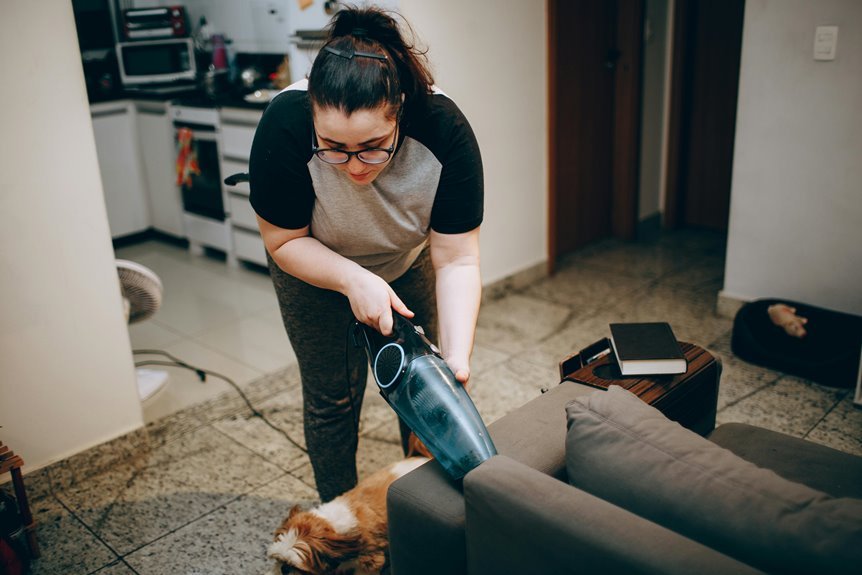

If pet hair seems woven into your carpet, don’t worry, you can lift much more of it with the right vacuum method. First, loosen clumps with a rubber squeegee, broom, or damp glove, then sprinkle on a light layer of baking soda to help release stubborn fur. Next, use a strong vacuum, adjust it to the proper height for your carpet, and clean in slow, overlapping passes from different angles. After that, use attachments to clean edges and corners where hair tends to collect. The small adjustments that make the biggest difference come next.
Loosen Pet Hair Before You Vacuum
Before you turn on the vacuum, take a few minutes to loosen pet hair tangled deep in the carpet. This simple step makes cleanup easier and less frustrating. It also helps you work more efficiently and makes the carpet look manageable again.
Start with a rubber squeegee and pull it across the carpet in short, firm strokes. The friction lifts hidden hair and gathers it into clumps that are easy to pick up.
For plush areas, use a rubber-bristled broom or damp rubber gloves to draw hair to the surface. In tight spaces, a lightly damp microfiber cloth helps collect stray strands. If odor is also a problem, sprinkle on a light layer of baking soda and let it sit briefly before cleaning.
As you work, collect the clumps with a dustpan so the area feels cleaner and fresher.
Prep Your Carpet to Lift More Hair
Once the loose clumps are gone, prepare the carpet so your vacuum can lift even more hair with less effort. Begin with simple carpet pre-cleaning. Sprinkle a light layer of baking soda over the area, then let it sit for 10 to 15 minutes. This can help loosen stubborn hair and freshen the room at the same time.
Then address static so the carpet fibers release trapped hair more easily. Mix one part fabric softener with three parts water, then lightly mist a small or medium section. Avoid soaking the carpet.
Let it settle for a few minutes before vacuuming. In the spots where your pets spend the most time, this extra step can help the area feel cleaner and more comfortable. You aren’t only removing hair. You’re helping create a cleaner, more welcoming home for everyone.
Choose a Vacuum That Lifts Pet Hair
You’ll get better results with a vacuum that has strong suction, a pet hair brushroll, and carpet height settings that match your rug.
A motorized brushroll helps pull hair from carpet fibers instead of skimming the surface. If your carpet is thick or plush, adjusting the height helps the vacuum move smoothly while still lifting stubborn hair.
Strong Suction Power
A strong vacuum does more than sound powerful. It helps pull stubborn pet hair from carpet instead of just skimming the surface. When you choose a model with real motorized suction, you have a better chance of lifting hair buried deep in the pile. That matters when you want your home to feel fresh, clean, and welcoming for everyone.
It is also important to look for strong airflow efficiency. Good airflow keeps suction steady as you move, so hair travels into the bin instead of settling back down. You’ll notice the difference most on dense carpet, stairs, and the rooms your pets use most.
To keep that power working effectively, empty the bin often and clean or replace filters as needed. A well maintained vacuum helps you stay ahead of shedding.
Pet Hair Brushroll
Few vacuum features matter more for pet hair than a motorized brushroll because it does more than rely on suction alone. It actively lifts hair from carpet fibers. When your dog or cat sheds as part of everyday pet grooming, that spinning bar helps you keep up more effectively. It grabs stubborn strands, loosens embedded fur, and gives your vacuum the added grip carpet needs.
This matters even more in busy homes like yours, where hair settles deep and quickly. Look for a brushroll designed for pet pickup, with firm bristles and consistent rotation. You’ll get better results, especially on fur that clings after playtime or naps.
It’s also important to stay consistent with brush maintenance. Each time you clear wrapped hair from the roll, you help your vacuum perform like an effective part of the household team.
Carpet Height Settings
Brushroll power helps, but the wrong carpet height setting can make pet hair much harder to lift. If your vacuum sits too low, it drags, clogs quickly, and keeps hair pressed into the fibers. If it rides too high, the brush barely touches the carpet, so pickup drops.
Match the beater height to your carpet. In plush rooms, raise it slightly so the brushroll can move freely while still grabbing hair. On lower pile carpet, lower the head enough to maintain solid contact without scraping.
If your vacuum has pile adjustment, test a small area first. You want smooth movement, steady suction, and visible hair removal. When the setting feels right, your vacuum works more effectively, and your home feels cleaner and more comfortable for everyone.
Use Vacuum Attachments for Stuck Pet Hair
Start with the right attachment, and you’ll remove hair that the main floor head often leaves behind. When fur gets trapped along edges, steps, and tight spaces, switch to the hose with a crevice tool. For carpeted stairs, a stair nozzle grips narrow surfaces more effectively, helping you clean the areas people notice most.
This simple adjustment can make the whole room feel more inviting:
- You reach fur-filled corners that used to make the room look unfinished.
- You clean stairs where family and guests notice the details.
- You remove stubborn hair from baseboards, edges, and tight seams.
- You create a cared-for finish that makes your home feel more comfortable.
Keep the hose close to the carpet and move each attachment with steady control for the best pickup.
Use Slow, Overlapping Vacuum Passes
Use slow, overlapping vacuum passes after you loosen stuck hair with attachments.
Vacuum in short sections so the brush and suction have enough time to lift hair from the carpet instead of passing over it too quickly.
Then vacuum the same area from a different direction, since pet hair often settles deep in the pile and may release more easily at another angle.
Vacuum More Slowly
Often, the biggest difference comes from slowing down your vacuum passes instead of rushing through the room. When you move too fast, the suction and brush head can’t pull embedded pet hair from the carpet effectively. Use a steady rhythm and deliberate pacing instead. That extra patience helps the machine lift what your family and pets leave behind.
- You give the brush time to loosen trapped hair.
- You help suction reach deeper into the carpet pile.
- You make each section feel cared for, not skipped.
- You turn cleanup into a calm, consistent routine.
As you vacuum, guide the machine with short, controlled movements and let it work before pushing forward again. You’ll see better pickup, less frustration, and a cleaner space that feels welcoming to everyone in your home.
Overlap Each Pass
Moving slowly works even better when each vacuum pass overlaps the last by a few inches. That small habit helps you catch stubborn pet hair that hides between tracks. It keeps your cleaning organized, and your room feels cared for, not half-finished. Use a steady overlap pattern, and your results will improve.
| Goal | What you do | Why it helps |
|---|---|---|
| Start straight | Pick one lane | Builds rhythm |
| Overlap 2 to 3 inches | Cover the edge of the last path | Grabs missed hair |
| Keep strokes short | Work in small sections | Improves control |
| Check coverage strip alignment | Follow a visible cleaning lane | Prevents gaps |
| Repeat as needed | Revisit hairy spots | Makes carpets feel fresh in shared spaces |
This approach keeps every section connected, like giving your whole home the same level of attention.
Change Vacuum Direction
Because pet hair settles in different directions inside the carpet pile, you’ll get better results when you vacuum slowly and then change your path for the next set of passes. Move north to south first, then go east to west with short, overlapping strokes. This cross-pattern lifts hair your first pass leaves behind, especially in dense areas.
- You’ll see the carpet look fresher, and that feels rewarding.
- You won’t leave concealed fur where your family gathers most.
- You can angle the hose into edges and corners with confidence.
- You can clean under furniture and feel proud of the whole room.
As you switch directions, keep a steady pace so the brush head and suction have time to work. If a spot still looks furry, make one more slow pass from a new angle.
Adjust Your Vacuum for Carpet Pile
When your vacuum is set to match the carpet pile, pet hair lifts more quickly and cleaning feels easier. Start by calibrating for the pile, then adjust the brush height so the beater bar can groom the fibers without dragging. On plush carpet, raise it slightly to reduce resistance. On low pile, lower it enough to maintain strong contact and pickup. The goal is smooth, steady movement, not a struggle.
| Carpet type | How it feels | Your fix |
|---|---|---|
| Low pile | You feel in control | Lower brush height |
| Medium pile | You feel progress | Test one notch higher or lower |
| Plush pile | You feel less strain | Raise brush height slightly |
This small adjustment helps your vacuum work with your carpet instead of against it, so your home feels cleaner, calmer, and more welcoming.
Reduce Pet Hair Buildup Between Cleanings
Regularly removing loose hair before it settles into the carpet makes each vacuum session faster and less frustrating.
For effective daily maintenance, brush your pet often and collect shed fur before it spreads. Place washable mats near favorite nap spots so your home stays welcoming, not overwhelmed. A quick pass with a rubber broom or damp glove on problem areas supports pet hair prevention and helps carpets stay cleaner between deeper cleanings.
- You feel more in control when fur no longer takes over your shared space.
- Your carpet stays softer, fresher, and more inviting for everyone.
- Your vacuum performs better because less hair gets packed into the carpet pile.
- Your cleaning routine feels lighter, easier, and more manageable.
Also, empty your vacuum bin often and check the filters, because strong airflow helps you stay ahead each day.
Frequently Asked Questions
How Often Should I Replace My Vacuum Filter for Pet Hair?
Replace your vacuum filter every 1 to 3 months if you have pets. Check for buildup regularly, follow the recommended replacement schedule, and use basic vacuum maintenance practices to keep your vacuum performing well.
Can Pet Hair Damage a Vacuum Motor Over Time?
Yes, pet hair can damage your vacuum motor over time because it can restrict airflow and increase the risk of overheating. You can protect your vacuum by clearing clogs, emptying the bin, and cleaning the filters regularly.
What Type of Carpet Traps the Most Pet Hair?
You’ll find that deep-pile and shag carpets trap the most pet hair because their thick pile and dense fibers hold strands tightly. Many pet owners choose lower-pile carpets because they are easier to clean and less likely to collect buildup.
Is It Safe to Vacuum Baking Soda From Carpets?
Yes, you can safely vacuum baking soda from carpets if you apply a light layer, wait briefly, and vacuum thoroughly. To support vacuum safety and carpet deodorizing, empty the bin and check the filters before cleaning.
Why Does My Vacuum Smell Worse After Removing Pet Hair?
Your vacuum smells worse because pet hair creates odor buildup inside the bin, brush roll, and filters. Clogged airflow can also overheat trapped debris and spread unpleasant smells. You can fix the problem by emptying the vacuum, cleaning the parts, and letting everything dry completely.
