

If you are choosing a robot vacuum for tile floors in 2026, you will want more than basic suction. The right model can handle grout lines, pet hair, and wet mop cleanup without leaving streaks or missed corners. Some can even map multi level homes and empty themselves.
Not every option is worth the price, and a few specs matter more than they first seem.
| Shark Navigator Robot Vacuum with Self-Empty Base |  | Best Overall | Cleaning Type: Vacuum only | Navigation: LiDAR mapping | App Control: Yes | VIEW LATEST PRICE | Read Our Analysis |
| eufy RoboVac 11S MAX Robot Vacuum Cleaner |  | Best Budget | Cleaning Type: Vacuum only | Navigation: Infrared sensors | App Control: No | VIEW LATEST PRICE | Read Our Analysis |
| Smart Wi-Fi Robot Vacuum Cleaner for Pet Hair | Best For Pet Hair | Cleaning Type: Vacuum + mop | Navigation: 3D obstacle avoidance | App Control: Yes | VIEW LATEST PRICE | Read Our Analysis | |
| Tapo Ultra-Slim LiDAR Robot Vacuum and Mop (RV20 Max Plus) |  | Best Smart Mapping | Cleaning Type: Vacuum + mop | Navigation: LiDAR mapping | App Control: Yes | VIEW LATEST PRICE | Read Our Analysis |
| Lefant LiDAR Robot Vacuum and Mop M330 Pro |  | Best For Tight Spaces | Cleaning Type: Vacuum + mop | Navigation: dToF LiDAR | App Control: Yes | VIEW LATEST PRICE | Read Our Analysis |
| Tikom Robot Vacuum and Mop with Self-Emptying Base |  | Best Self-Emptying | Cleaning Type: Vacuum + mop | Navigation: LiDAR mapping | App Control: Yes | VIEW LATEST PRICE | Read Our Analysis |
| ROPVACNIC Robot Vacuum and Mop Combo |  | Best Mop Combo | Cleaning Type: Vacuum + mop | Navigation: Obstacle sensing | App Control: Yes | VIEW LATEST PRICE | Read Our Analysis |
| ILIFE V2 Robot Vacuum Cleaner for Pet Hair | 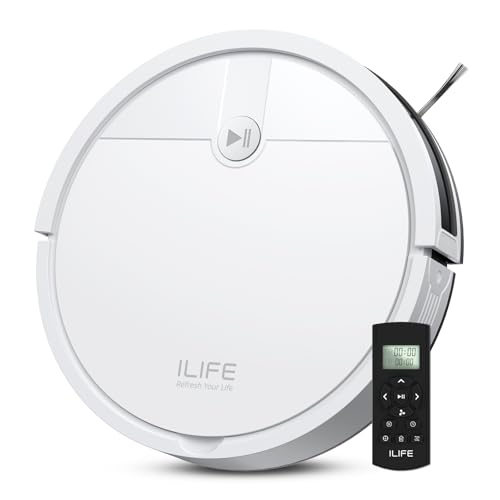 | Best For Hard Floors | Cleaning Type: Vacuum only | Navigation: Infrared sensors | App Control: No | VIEW LATEST PRICE | Read Our Analysis |
More Details on Our Top Picks
Shark Navigator Robot Vacuum with Self-Empty Base
If you want a robot vacuum that can handle tile floors with minimal fuss, the Shark Navigator Robot Vacuum with Self-Empty Base is a strong choice. It delivers powerful suction that lifts fine dust, dirt, pet hair, and dander from tile, rugs, and carpets. Its self-cleaning brushroll helps reduce hair wrap, and three power levels let you adjust cleaning as needed. SmartPath LiDAR maps your home and cleans row by row, while sensors help avoid obstacles. Use the SharkClean app or Alexa to schedule cleanings, set no-go zones, and let the self-empty base handle up to 30 days of debris.
- Cleaning Type:Vacuum only
- Navigation:LiDAR mapping
- App Control:Yes
- Voice Control:Alexa/Google
- Auto-Charging:Yes
- Surface Compatibility:Carpet/hard floors
- Additional Feature:Self-empty base
- Additional Feature:Anti-hair wrap brushroll
- Additional Feature:No-go zones
eufy RoboVac 11S MAX Robot Vacuum Cleaner
The eufy BoostIQ RoboVac 11S MAX is a solid choice if you want a slim, low-noise robot vacuum that can fit under furniture and clean tile floors with minimal effort. It includes BoostIQ suction that adjusts in about 1.5 seconds, along with a 2.85-inch profile that helps it reach tight spaces. It runs for up to 100 minutes, returns to its dock automatically, and uses infrared sensors to help avoid drops and bumps. Because it is renewed, you may notice minor cosmetic wear, but it has been inspected and evaluated. The remote control is straightforward, though there is no app or WiFi control.
- Cleaning Type:Vacuum only
- Navigation:Infrared sensors
- App Control:No
- Voice Control:Alexa/Google
- Auto-Charging:Yes
- Surface Compatibility:Hard/medium-pile floors
- Additional Feature:Super-thin profile
- Additional Feature:Tempered glass cover
- Additional Feature:Washable filter
Smart Wi-Fi Robot Vacuum Cleaner for Pet Hair
If you are dealing with pet hair on tile floors, the XIEBro Life BR151-YY smart Wi-Fi robot vacuum is a strong choice thanks to its 1400 Pa suction, brushless suction port that helps resist clogs, and 2-in-1 vacuum and mop design. You can control it through the Tuya Smart app, Alexa, Google Assistant, or the remote. Its 3D obstacle sensors, slim 2.87-inch body, and zig-zag mode help it clean efficiently. You will also get up to 100 minutes of runtime, automatic recharging, and a washable mopping cloth for easy upkeep.
- Cleaning Type:Vacuum + mop
- Navigation:3D obstacle avoidance
- App Control:Yes
- Voice Control:Alexa/Google
- Auto-Charging:Yes
- Surface Compatibility:Hard/low-pile floors
- Additional Feature:2-in-1 mopping
- Additional Feature:230mL water tank
- Additional Feature:Zig-zag cleaning
Tapo Ultra-Slim LiDAR Robot Vacuum and Mop (RV20 Max Plus)
Should you want a slim, smart robot that can clean tile floors thoroughly without missing edges, the Tapo RV20 Max Plus stands out with its LiDAR mapping, strong 5300 Pa suction, and auto-empty dock. You get grid-style coverage, precise maps, and app controls for no-go zones, virtual walls, and scheduled runs. Its 300 ml tank, washable mop cloth, and three water levels help you handle sticky spots without soaking grout. It also enhances suction on low-pile carpet, returns to recharge, and resumes cleaning. The 3L dust bag and HEPA filter keep upkeep simple.
- Cleaning Type:Vacuum + mop
- Navigation:LiDAR mapping
- App Control:Yes
- Voice Control:Alexa/Google
- Auto-Charging:Yes
- Surface Compatibility:Hard/low-pile floors
- Additional Feature:17,000 Pa dock suction
- Additional Feature:3L dust bag
- Additional Feature:3 water flow levels
Lefant LiDAR Robot Vacuum and Mop M330 Pro
If you want a tile floor robot that can map your home accurately and clean around clutter without constant babysitting, the Lefant LiDAR Robot Vacuum and Mop M330 Pro is a strong pick. Its dToF LiDAR scans up to 15 meters, while PSD sensing helps it avoid cords, furniture, and small debris, even in the dark. You can set no go zones in the app, switch between Quiet, Standard, and Max suction, and let it increase power on carpets. The 200 ml tank mops hard floors, the anti tangle port helps with pet hair, and the slim body slips under low furniture.
- Cleaning Type:Vacuum + mop
- Navigation:dToF LiDAR
- App Control:Yes
- Voice Control:Alexa/Google
- Auto-Charging:Yes
- Surface Compatibility:Multi-surface
- Additional Feature:Dual-band Wi-Fi
- Additional Feature:Anti-tangle suction port
- Additional Feature:95 mm slim body
Tikom Robot Vacuum and Mop with Self-Emptying Base
Tikom’s Robot Vacuum and Mop with Self-Emptying Base is a strong choice for busy homes that want hands-free cleaning on tile floors, especially if you dislike emptying dust after every run. It includes a 3L self-emptying bag that can last for weeks, even up to 90 days, plus auto-recharge and resume when the battery runs low. Its 6000 Pa suction lifts grit effectively, and the 2-in-1 mop lets you adjust water flow levels. Use LiDAR mapping, app controls, Alexa, and no-go zones to customize each clean.
- Cleaning Type:Vacuum + mop
- Navigation:LiDAR mapping
- App Control:Yes
- Voice Control:Alexa
- Auto-Charging:Yes
- Surface Compatibility:Multi-surface
- Additional Feature:3L self-empty bag
- Additional Feature:5 multi-floor maps
- Additional Feature:3 water flow settings
ROPVACNIC Robot Vacuum and Mop Combo
Should you want a tile-floor cleaner that vacuums and mops in one pass, the ROPVACNIC Robot Vacuum and Mop Combo is a strong fit. It offers 5200Pa suction, a 3-point cleaning system, and dual rotating side brushes that help lift pet hair without tangles. Its electronically controlled mop provides four water levels for different messes, while the app lets you set modes, schedules, and intensity. Alexa and Google Assistant support make control easy. It recharges itself, avoids obstacles, and runs up to 120 minutes, so you can clean larger rooms with less effort.
- Cleaning Type:Vacuum + mop
- Navigation:Obstacle sensing
- App Control:Yes
- Voice Control:Alexa/Google
- Auto-Charging:Yes
- Surface Compatibility:Hardwood/low-pile
- Additional Feature:4-stage water adjustment
- Additional Feature:Dual rotating brushes
- Additional Feature:Spare HEPA filter
ILIFE V2 Robot Vacuum Cleaner for Pet Hair
Should you want a slim, easy to use robot vacuum that handles pet hair and everyday debris on tile floors, the ILIFE V2 is a strong pick. You get an ultra slim 2.99 inch body that slips under beds and sofas, plus tangle free suction that grabs hair without clogging. It runs up to 120 minutes, returns to its dock automatically, and offers Auto, Spot, and Edge cleaning modes. Built in infrared sensors help it avoid drops and bumps. You can use the remote or one touch control, and its 300 mL bin suits daily tidying.
- Cleaning Type:Vacuum only
- Navigation:Infrared sensors
- App Control:No
- Voice Control:Alexa
- Auto-Charging:Yes
- Surface Compatibility:Hard/low-pile floors
- Additional Feature:Tangle-free suction port
- Additional Feature:2.99-inch slim
- Additional Feature:69 dB noise
Factors to Consider When Choosing a Robot Vacuum Cleaner for Tile Floors
When choosing a robot vacuum for tile floors, focus on strong suction and a brush design that lifts debris without scattering it. You should also look for a low-profile design so it can reach under furniture, plus mopping functionality if you want extra cleaning power. Smart control options can make scheduling and adjusting settings much easier.
Tile Suction Strength
To keep tile floors looking clean, focus on suction that matches the mess you deal with. 1000 to 2000 Pa is usually enough for routine upkeep, while 3000 Pa or more helps with embedded dirt, grout residue, and pet debris. If you need deeper pickup, higher Pa can lift fine dust from grout lines, but it may reduce runtime, so check battery life for your coverage. Look for models with adjustable suction so you can switch between quiet, low power maintenance and stronger cleaning as needed. Also consider overall performance: a strong vacuum works best when it has good airflow, a dustbin that does not fill too quickly, and filtration that keeps dust from blowing back onto your tile.
Brush Design Matters
Brush design can make or break how well a robot vacuum handles tile, especially around grout lines and baseboards. You’ll get safer cleaning with soft rubber or silicone main brushes and side brushes because they are less likely to scratch glazed surfaces or grind into grout. If you deal with pet hair, choose a self-cleaning or anti-hair-wrap brushroll so you do not spend as much time cutting tangles away. Stiff bristled side brushes can help pull dirt out of grout and along edges, but they can also flick fine dust across smooth tile if suction is not strong enough. Wide brush heads with overlapping side brush coverage improve edge-to-edge pickup on larger tiles. Brushless suction ports also work well because they glide over grout and resist hair wrap.
Low-Profile Navigation
A low-profile robot vacuum can make a big difference on tile floors because it can slip under low-clearance furniture, cabinets, and sofas where dust and crumbs often collect. Aim for a height at or below 3.5 inches so you can cover tight gaps that taller models miss. You will also want to check how it senses obstacles. A slim body can limit top-mounted LiDAR, so side or bumper sensors matter for safe routing and drop detection. If you clean large tiled spaces, look at dustbin size or auto-empty support so you are not stopping often. Finally, verify edge-cleaning performance, since shorter models can lose brush reach along baseboards and grout lines.
Mopping Functionality
Mopping can be a major advantage on tile floors, but only if the robot gives you control over how wet the mop gets. You should look for a dedicated electronic water tank with adjustable flow levels so you can keep tile damp enough to clean without leaving streaks or risking damage. A washable or disposable mop cloth with even water release also matters because it helps the robot cover grout lines consistently instead of pooling in spots. Carpet avoidance or no mop zones are important if you have rugs, since wet pads can ruin them. Bigger tanks, around 200 to 300 mL or more, along with long runtime, let you mop larger areas without stopping. Separate vacuum and mop modes are ideal too because they let debris get picked up before the floor gets wet.
Smart Control Options
Smart control can make a tile-floor robot vacuum much easier to manage, especially if you want to adjust cleaning without getting up. With Wi-Fi and app control, you can schedule runs, set virtual no-go zones, and adjust suction or water output from anywhere. Check that your network supports the required 2.4 GHz band, or the model’s specified connection. Voice assistant support with Alexa or Google Assistant lets you start, stop, and check status hands-free, though the app usually gives you more options. If you live in a multi-level home, look for multi-map support and cloud syncing so you can store floor plans and clean each level efficiently. Also, review app permissions, encryption, and data-sharing policies before enabling remote features. Onboard buttons or remotes help whenever Wi-Fi is down.
Battery And Runtime
Whilst you’re choosing a robot vacuum for tile floors, battery life matters as much as suction. You should aim for at least 90 to 120 minutes of runtime so the robot can cover medium to large spaces without constant charging. Check for Recharge & Resume, since it lets the vacuum dock, top up, and pick up where it stopped. Battery capacity matters too: higher capacity lithium ion packs usually run longer and last longer than lower capacity options. Pay attention to suction settings, because strong modes and vacuum and mop cleaning can drain the battery fast. If you’ve got a very large tiled home, look for fast recharge times and multi map support so you can split cleaning into efficient sessions without losing momentum or wasting time between runs.
Frequently Asked Questions
How Often Should I Replace the Brushes on a Tile Floor Robot Vacuum?
You should replace your robot vacuum’s brushes every 6 to 12 months on tile floors, or sooner if they become frayed. Inspect them monthly and replace them whenever cleaning performance drops.
Can Robot Vacuums Safely Clean Grout Lines Without Damage?
Yes, you can usually let a robot vacuum clean grout lines safely, provided you choose soft brushes and avoid aggressive scrubbing. You can prevent damage by keeping the wheels, sensors, and pads clean, and by monitoring worn parts.
Do Robot Vacuums Work Better on Glossy or Matte Tile?
You’ll usually get better performance on matte tile because traction improves and dust shows less. Glossy tile can still work well for sensors, but wheels may slip more, and fine debris may stand out and scatter.
How Noisy Are Robot Vacuums During Nighttime Cleaning?
At night, robot vacuums usually produce 55 to 70 decibels, which is about the level of a normal conversation. You can schedule quieter modes, but hard floors tend to echo more. If you are sensitive to noise, run it earlier or close doors to soften the sound.
Will a Robot Vacuum Scratch Delicate Tile Surfaces?
Not usually, provided you choose soft brushes, clean wheels, and keep grit off your floors. Avoid dragging debris, because particles can scratch delicate tile more than the vacuum itself.
