
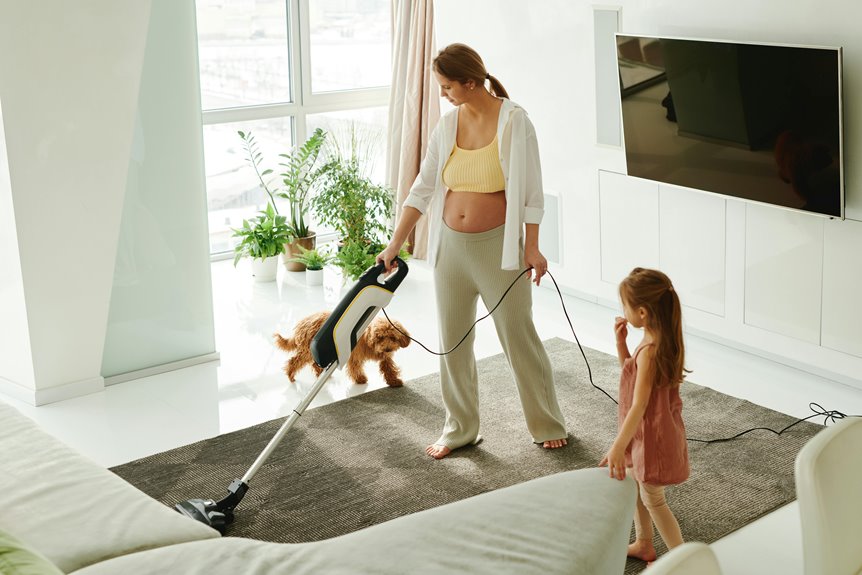

Yes, vacuuming can help reduce asthma triggers because it removes dust, pet dander, pollen, and dust mites from carpets, rugs, and furniture before they continue circulating through your home. However, the way you vacuum matters just as much as how often you do, since the wrong machine can stir up the very particles you are trying to remove. Once you understand where triggers collect and what type of vacuum helps protect your indoor air, the next steps become much clearer.
Can Vacuuming Reduce Asthma Triggers?
Yes, vacuuming can help reduce asthma triggers, especially when dust, dust mites, and pet dander collect in floors and carpets.
Cleaning these surfaces can make your space feel safer, fresher, and more supportive of healthy breathing.
This matters because a cleaner home can reduce the allergens that settle into carpet fibers, particularly in high traffic rooms where people gather.
Vacuuming works best as part of a consistent cleaning routine, not as a cure on its own.
Proper vacuum maintenance also helps the machine stay effective, so it continues removing debris instead of leaving it behind.
Strong allergen containment is important as well, because collected particles should remain trapped.
With the right routine, you can create a cleaner space where everyone can breathe more easily.
How Does Vacuuming Remove Indoor Allergens?
While you vacuum, the machine pulls in air and lifts tiny particles from floors, rugs, and carpet fibers, then traps them inside the bag or canister. That process matters because many asthma triggers settle where your family walks, plays, and gathers each day.
As the vacuum moves over surfaces, brushes loosen dust, pet dander, and dust mites so suction can remove them.
This is where allergen removal and dust capture work together. You clear debris from the places where it builds up most, especially in carpeted rooms.
As a result, your home can feel fresher and more welcoming for everyone in the household. Vacuuming doesn’t treat asthma, but it can reduce the amount of indoor allergens in your living spaces, which supports a cleaner, more comfortable routine for your whole household.
When Can Vacuuming Make Asthma Worse?
Vacuuming can help remove allergens, but it can also worsen asthma while you clean. As you vacuum, dust, pet dander, and tiny particles can lift from carpets, rugs, and furniture and move into the air inside your home. If you already feel chest tightness or wheezing, vacuuming during a flare-up can put more strain on your airways and trigger additional coughing.
The risk also increases when dust escapes from the vacuum or circulates through the room. Because of this, it may help to have someone else vacuum while you step away for a short time.
If you need to clean yourself, wearing a mask and leaving the room afterward can reduce exposure. In many homes, vacuuming after symptoms improve feels easier on your breathing and helps you maintain your daily routine.
Which Vacuum Is Best for Asthma?
How do you choose a vacuum that supports your breathing instead of sending dust back into the room? Start with strong dust containment. Choose a sealed machine that keeps allergens inside, not one that leaks them while you clean. Look for vacuum certification from trusted allergy organizations, because it can help you feel more confident in your choice for your family.
Next, pay attention to how the vacuum stores debris.
Bags often hold dust more securely, especially double-thickness paper or microfiltration bags.
If you’re considering a bagless canister, choose one that empties cleanly and closes tightly, since messy dumping can release particles back into your space.
Also check for sturdy seals, easy bag changes, and strong pickup on carpet and rugs.
A well-contained vacuum can help your home feel safer, calmer, and more comfortable.
Why Do HEPA Filters Matter for Asthma?
Because tiny allergen particles can stay in the air long after you clean, a HEPA filter matters because it helps trap more of that dust instead of blowing it back into your room. That means your vacuum supports cleaner air filtration, so your space feels safer and more comfortable for everyone at home.
- You get stronger particle capture for dust, dander, and mite waste.
- You breathe in fewer leftover particles that can linger after vacuuming ends.
- You create a room that feels calmer, fresher, and easier to share.
- You gain more confidence that your cleaning helps, not hurts.
That difference matters whenever asthma is part of your daily life. With HEPA air filtration, your vacuum works like a better teammate. It keeps more irritants contained, so you can feel more at ease in the place where you belong.
How to Vacuum Without Spreading Dust
While a good vacuum can remove dust and allergens from your floors, the way you use it matters just as much if you want to keep those particles out of the air. Move slowly, overlap passes, and avoid fast back-and-forth strokes that kick up debris. If you have asthma, wear a mask and ask for help if you can, because your comfort matters.
Next, focus on dust containment methods that keep allergens from escaping. Use a sealed vacuum, keep the bag or canister from getting too full, and empty it outdoors.
If possible, leave the room right after cleaning so stirred dust can settle. Some people like vacuuming with windows cracked, but only do that if outdoor air is clean. Together, these habits help you care for your space and everyone breathing in it.
How Often Should You Vacuum for Asthma?
You should vacuum about once a week, and you may need to clean twice weekly if dust seems to trigger your symptoms.
Focus first on high-risk areas such as carpets, rugs, and bedrooms, because dust and dander often build up fastest there.
If vacuuming makes you cough or wheeze, adjust your schedule, use safer cleaning methods, and pay close attention to how your body responds.
Recommended Vacuuming Frequency
Usually, vacuuming once a week is a practical starting point if you’re trying to reduce asthma triggers at home. For many families, that schedule is manageable, consistent, and helpful. If symptoms increase or your home gathers dust quickly, you may need to clean more often, such as twice a week.
- Vacuum weekly if you want a simple, reliable routine.
- Increase to twice a week when dust, pet dander, or carpet buildup returns quickly.
- Keep your vacuum working properly by emptying the bag or canister before it becomes full.
- If vacuuming affects your breathing, allow time between sessions and choose times when you can step away after cleaning.
This approach helps you create a routine that fits your home, supports respiratory health, and helps everyone feel more comfortable each day.
High-Risk Areas First
Because asthma triggers don’t build up evenly across your home, start with the places that trap the most dust and dander first. Focus on hallway priorities, rugs near doors, and entryway corners, where shoes track in pollen, dirt, and tiny particles that settle quickly. These spots affect the air your family shares, so cleaning them first can help everyone feel more comfortable.
Then move into carpeted rooms, under couches, along baseboards, and around pet resting spots. When time is limited, treat these areas as your core routine instead of trying to vacuum every inch at once. That approach keeps your effort steady and practical.
You aren’t falling behind. You’re focusing on the spaces that collect the heaviest trigger load, and that order can help your home feel calmer, cleaner, and more supportive each day.
Adjusting To Symptoms
As asthma triggers build up fast, the best vacuuming schedule is the one that matches your symptoms and your home. You don’t need a perfect routine. You need symptom pacing and smart activity adjustment, so cleaning supports your breathing instead of challenging it.
- If dust settles quickly, vacuum weekly so your space feels calmer and easier to share.
- If pets, carpets, or busy rooms raise symptoms, vacuum twice a week and ask for help when needed.
- If vacuuming makes you cough, step out, wear a mask, or let someone else handle it.
- If symptoms flare after cleaning, space sessions out, empty the vacuum in advance, and pair it with damp dusting.
This way, you stay part of your home’s rhythm without feeling like you’re always catching up alone each week.
Where Do Asthma Triggers Hide in Soft Surfaces?
You’ll often find asthma triggers hiding deep in carpets and rugs, where dust, dirt, and pet dander settle and build up over time.
They can also cling to upholstered furniture, especially in cushions and fabric folds that trap particles you may not always see.
Because you spend many hours close to them, bedding and mattresses can also hold dust mites and other allergens that may affect your breathing at night.
Carpets And Rugs
Although carpets and rugs can make a room feel warm and cozy, they can also trap asthma triggers deep in their fibers. If you live with asthma, these soft surfaces may hold irritants close to the spaces where your family gathers, plays, and rests. Carpet pile depth matters because thicker fibers can hide more dust, pet dander, and crumbs. Rug fiber type also affects what gets trapped and how tightly it clings.
- Dust settles low and sinks beneath your feet.
- Dust mites thrive where warmth and moisture linger.
- Pet dander clings to fibers and shifts with every step.
- Pollen comes in from outdoors and stays tucked inside.
This means your carpet or rug can quietly collect triggers, even when the room looks clean.
If that feels frustrating or overwhelming, you aren’t alone.
Upholstered Furniture
Upholstered furniture can hold asthma triggers just as easily as carpets. Couches, armchairs, and padded dining chairs often trap dust, pet dander, and fabric lint deep in the fabric. These particles also collect in cushion seams and creases, where they can be missed during routine cleaning. When your family uses these seats often, the fabric can gather more irritants over time.
Because upholstered furniture is close to your face, disturbed particles can quickly enter your breathing space. Vacuum these surfaces gently with an upholstery attachment and a vacuum that has good filtration, especially in areas where crumbs, hair, and dust collect. If vacuuming worsens your symptoms, ask someone else to handle it while you leave the area for a short time. This can help keep your furniture cleaner and your home easier to breathe in each day.
Bedding And Mattresses
Since people spend so many hours in bed, bedding and mattresses can become major hiding places for asthma triggers. You aren’t alone if your bed looks clean but still holds irritants deep inside the fabric and filling.
- Sheets and blankets trap skin flakes, which feed dust mites in the mattress.
- Pillows can collect sweat, dust, and pet dander, leading to allergen buildup over time.
- Mattresses hold allergens below the surface, so simple shaking won’t remove them.
- Beds can release particles when you fluff pillows or change sheets, which may irritate your breathing.
That is why bedding care matters alongside vacuuming floors. When you wash bedding weekly in hot water and use allergen-proof covers, you create a sleep space that feels safer, calmer, and more comfortable.
What Else Should You Vacuum for Asthma?
What else should you vacuum when asthma triggers build up quickly in your home? Look beyond bedroom floors and clean upholstered chairs, couches, curtains, and rugs, where dust and pet dander collect. Don’t forget stairs and vents, since both can trap fine particles that continue circulating through shared spaces.
Next, think about the areas your family uses every day.
Vacuum entry mats, playroom corners, closet floors, and pet sleeping areas, especially when fur spreads throughout the house. Car interiors matter too, because seats and floor mats hold pollen, crumbs, and dust that travel back inside with you. If you want your home to feel easier to breathe in, pay attention to these often overlooked spots. This helps you care for the spaces where everyone gathers, rests, and rides together each day.
When Vacuuming Isn’t Enough for Asthma
Even though you vacuum often, it won’t remove every asthma trigger in your home. You still need full allergen control, because dust on floors is only part of the problem. Mold, smoke, pests, and high home humidity can keep symptoms going, even when carpets look clean. That’s why your routine works best when every room supports your breathing.
- Wash bedding weekly in hot water so dust mites don’t settle where you rest.
- Use damp cloths for dusting, because dry wiping can send particles back into the air.
- Fix leaks and lower home humidity to help stop mold from growing in shared spaces.
- Control smoke, pet dander, and pests, since vacuuming can’t fully remove those triggers.
You aren’t failing when asthma still flares. You’re building a healthier home, step by step.
Frequently Asked Questions
Can Robot Vacuums Help Reduce Asthma Triggers Safely?
Yes, you can use robot vacuums safely if you choose models with strong safety features and effective allergen capture. Run them when you are away, empty the bins carefully, and pair them with HEPA filtration.
Should I Vacuum After Pest Treatment or Extermination?
Yes, you should vacuum after pest treatment, but wait for the recommended reentry time and follow all label instructions. Use a HEPA vacuum to clean up post-treatment debris. If you have asthma, ask someone you trust to help.
Can Vacuuming Affect Asthma Differently in Babies’ Rooms?
You can make vacuuming either help or worsen babies’ asthma in their rooms. Dust in a baby’s room is easily disturbed, so use a HEPA vacuum and careful nursery allergen control to help protect your child.
Is Steam Cleaning Better Than Vacuuming for Asthma Triggers?
Not always. You will usually get better allergen removal from a HEPA vacuum, while steam cleaning can help some carpets but will not replace regular dust control. For your shared asthma-safe routine, vacuum weekly and use steam cleaning occasionally.
Do Scented Vacuum Deodorizers Make Asthma Symptoms Worse?
Yes, while they smell “clean,” scented vacuum deodorizers can worsen your asthma. If you have fragrance sensitivity, they may irritate your airways and reduce indoor air quality, so it is usually safer to skip them and choose fragrance-free cleaning products.
